
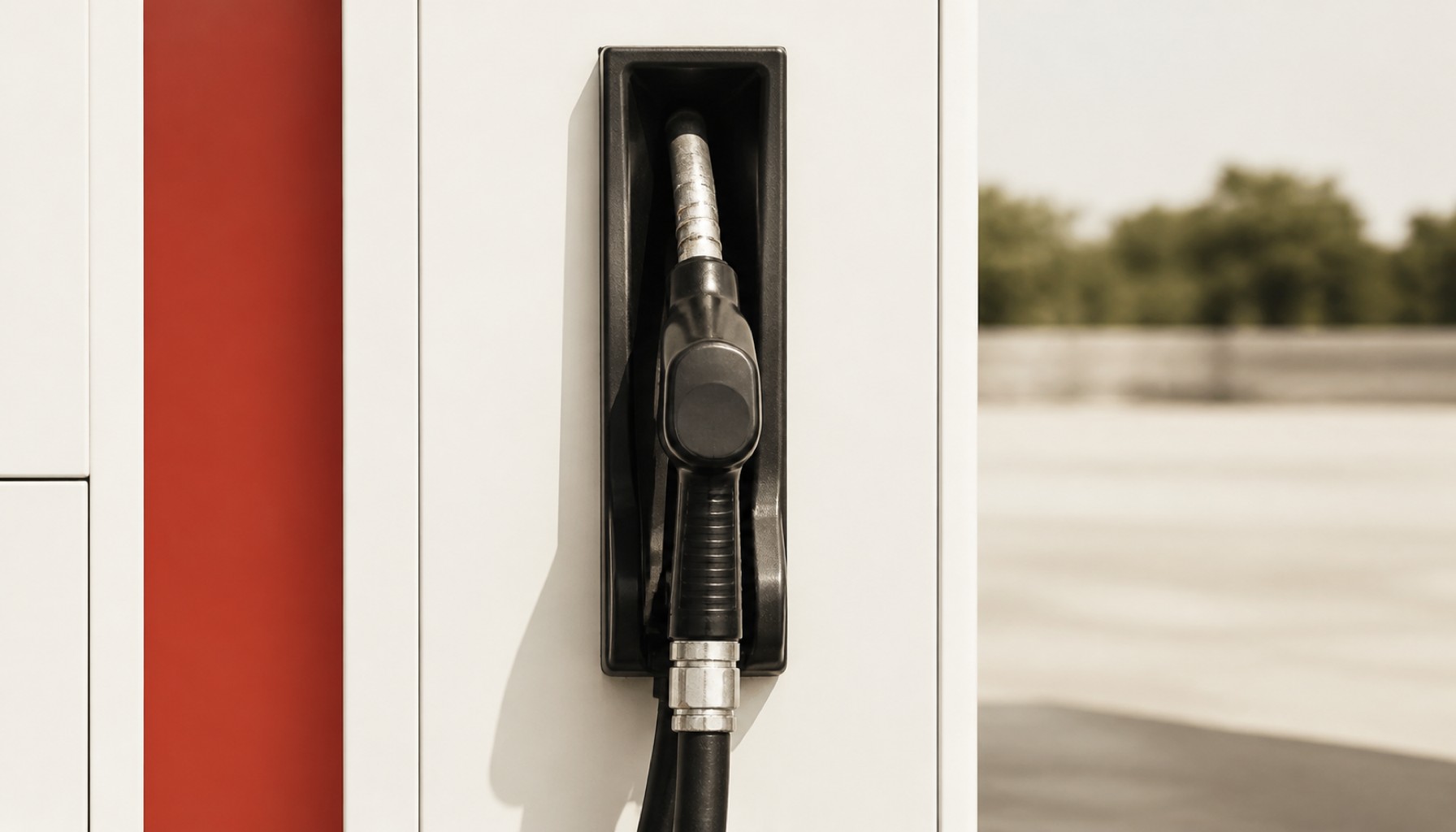
Destatis warns: 2.9 percent inflation driven by energy prices
5 min read
Since the fuel discount expired on 30 June, freight companies and tradespeople are once again paying the full tax rate on diesel and petrol. The Federal Statistical Office puts inflation for August at 2.9 percent, with energy 10.5 percent higher than a year ago. Businesses with a price clause tied to the overall index receive almost no compensation for this increase.
Key Takeaways
- Destatis estimates August inflation at a preliminary 2.9 percent. The final figure follows on 10 September 2026 – the real cut-off date for many price clauses.
- Energy became 10.5 percent more expensive, while food stayed at 0.1 percent. The price surge comes almost entirely from the energy basket.
- In July, fuels were 23 percent above last year’s level; electricity was below it. In the statistics, both count as energy. The fleet paid the price for the increase, while the warehouse paid less than a year ago.
- Producer prices show the surge one step earlier. Petroleum products cost nearly a third more in July than a year earlier, copper well over a quarter more.
Related:Inflation is falling: steer your margins instead of hoping / Location choice: energy prices beat a motorway location
What is core inflation? Destatis calculates the rate of inflation excluding food and energy. In August 2026, this figure stands at a preliminary 2.4 percent, below the overall rate. It shows the price pressure outside the two volatile categories.
The fuel discount is gone, but petrol stays expensive
On 30 June, the fuel discount ended – the measure with which the federal government had subsidised petrol since spring. For a freight company, that meant: from 1 July, it filled up at the full tax rate. At the pump, it felt every cent of it. Ruth Brand, President of the Federal Statistical Office, explicitly attributed the price rise in July to energy prices, which had increased above average – fuels in particular.
On 31 August, her office published the rapid estimate for August: inflation of 2.9 percent year on year, 0.1 points more than in July. In June, the rate had still stood at 2.3 percent, suggesting a cooling. That cooling is over now that the discount has ended.
Update from 10 September 2026: Destatis has published the final August figures and confirmed the 2.9 percent. Energy is 10.5 percent above last year’s level, fuels 27.7 percent. So if you have a price escalation clause tied to the overall index, you calculate with 2.9 percent.
One Number, Two Directions
The headline rate is an average across a basket whose prices are currently moving in opposite directions. Energy jumped 10.5 percent in August, while food prices stayed essentially flat. The remaining categories fall somewhere in between.
| August 2026, preliminary | year on year |
|---|---|
| Consumer prices, total | +2.9 percent |
| Core rate, excluding energy and food | +2.4 percent |
| Energy (household energy and fuels) | +10.5 percent |
| Food | +0.1 percent |
| Services | +2.8 percent |
| Goods | +3.0 percent |
Source: Federal Statistical Office (Destatis), flash estimate of August 31, 2026. Energy: +3.4 percent in June, +8.3 percent in July. Final figures due September 10.
The flash estimate does not yet break energy down into fuels and household energy. The July figures do. They reveal the gap between motor fuels and household energy: the end of the fuel discount hit only the fuels. Electricity, gas, and district heating were all below their year-earlier levels in July. Because fuels carry more weight than electricity in the statistical energy basket, the category still rises despite cheaper power.
| Item (July 2026) | year on year | month on month |
|---|---|---|
| Motor fuels | +23.0 percent | +11.2 percent |
| Diesel | n/a | +12.6 percent |
| Light heating oil | +34.7 percent | n/a |
| Household energy, total | -1.4 percent | n/a |
| Electricity | -5.3 percent | n/a |
| Natural gas, including associated costs | -2.9 percent | n/a |
| District heating | -1.2 percent | n/a |
Source: Federal Statistical Office (Destatis), consumer price index for July 2026. Heating oil carries little weight in the household energy basket.
For a business running a delivery fleet and a production hall, these are two very different calculations. The fleet pays for the July spike; the electricity bill does not. In the profit and loss statement, the two items sit in separate lines – in everyday language, they are lumped together as energy. A flat energy surcharge spread across all products therefore distributes a fuel bill onto costs that never actually rose.
Petroleum products cost producers a third more
One step ahead of the consumer sits the producer price index, which Destatis released on 20 August for July. Commercial products cost three percent more than a year ago, while petroleum products came in just under a third higher. Electricity, too, remained below last year’s level at this stage.
| Producer prices July 2026 | year-on-year | month-on-month |
|---|---|---|
| Commercial products, overall | +3.0 percent | +1.1 percent |
| Energy | +3.8 percent | +3.4 percent |
| Petroleum products | +31.4 percent | +6.6 percent |
| Fuels | +29.4 percent | n/a |
| Electricity | -1.6 percent | n/a |
| Copper and semi-finished copper products | +28.7 percent | n/a |
Source: Federal Statistical Office of Germany, producer price index for commercial products, July 2026, published on 20 August 2026.
Time separates the producer price from the consumer price. A haulage firm feels diesel at the next fill-up receipt. A metal processor buying copper only notices the surcharge when the next supply contract is renegotiated or an existing one runs out. The consumer index captures the same rise later and across the entire basket of goods. Eurostat reported the same pattern for the euro area on 1 September: a rate of 3.3 percent, driven by energy.
What the contract makes of the figure
Many supply and lease agreements among mid-sized companies contain a price escalation clause tied to the consumer price index. It kicks in as soon as Destatis publishes the final monthly figure – depending on the contract, once a year or once an agreed threshold is crossed. If the contract only cites the headline rate, the adjustment follows the roughly three percent. The 23-percent fuel spike across the fleet stays invisible within it. If the contract references an energy index without tracking fuels separately, it averages diesel together with the falling electricity price.
Conversely, a blanket energy surcharge hits customers whose goods contain no fuel at all. Food stood at 0.1 percent in August. A grocer handed a general surcharge sees no justification for it in the statistics and negotiates accordingly. A surcharge calculated per trip, route or pallet, by contrast, matches the July fuel figures.
On 10 September, Destatis will publish the final August figure. That is the day it becomes clear whether the adjustment triggers – and by how much. Whom it affects depends on the index reference in each contract: the headline rate, the energy basket, or a fuel index. Whether the August breakdown shows the same picture as July – dearer fuel, cheaper electricity – is something controlling and procurement teams will only know then.
Frequently Asked Questions
Is the August figure already final?
No. Destatis published a preliminary estimate on 31 August. The final results will follow on 10 September 2026. Whether Destatis revises the preliminary estimate will be settled on 10 September.
Are electricity and gas moving in step with fuel?
Not in July 2026. Household energy was down 1.4 percent overall compared with the previous year, while fuels were 23 percent higher. Producer prices show the same pattern. This breakdown is not yet available for August.
What does the euro area figure of 3.3 percent measure?
The Harmonised Index of Consumer Prices (HICP), which Eurostat uses to make countries comparable. Under this method, the German figure also comes in at a likely 2.9 percent; the euro area value reflects a different energy basket.
Continue reading on MyBusinessFuture
Read more on MyBusinessFuture
MyBusinessFutureElectricity Price Relief 2026: What Manufacturing Businesses Need to CheckMyBusinessFutureDesertec Reloaded: What Desert Power Means for Energy CostsMyBusinessFutureEU Hydrogen Bank: 1.3 billion change the distributionMore from the MBF Media Network
cloudmagazinShopify threatens Claude Code over a single fileDigital ChiefsWhy AI Fails at Master DataSecurityTodayExploitGym: OpenAI Agents Built Themselves a Secret ChannelImage source: AI-generated (September 2026)
Translated from the German original using artificial intelligence. The German version is authoritative.

