
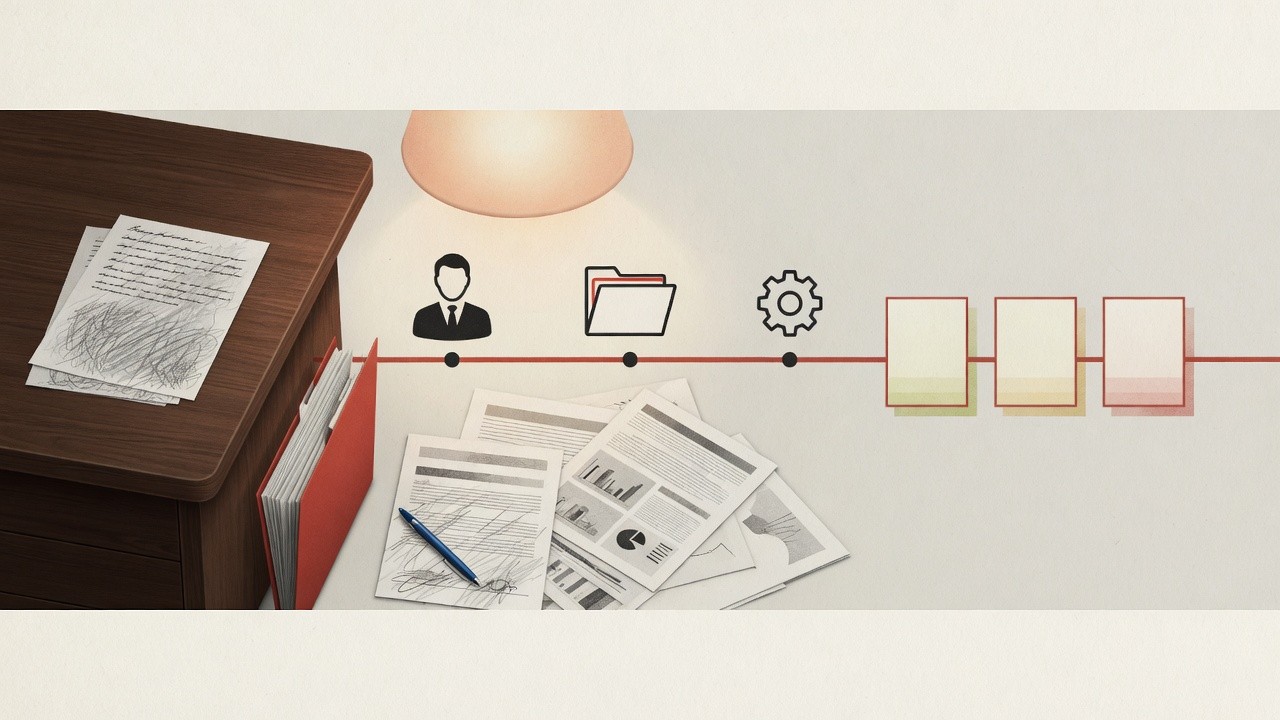
Succession without a successor: Making the handover work
6 min read
Around 243,000 owners could exit the market without a succession plan by the end of 2026. The main reason? There simply aren’t enough buyers. For managing directors without a family successor, the value of their life’s work hinges on one critical question: Can the business run when the boss is no longer at the helm?
Key Takeaways
- Buyers are missing, not businesses: According to the DIHK succession report, there are only about 4,000 prospective buyers for 9,600 businesses ready to change hands. A lack of successors is the most frequently cited hurdle.
- Owner dependence depresses valuation: If the business revolves around the owner’s expertise and contacts, its value plummets for any external buyer. Automation reduces this dependency.
- Three years’ lead time decides: Transferring processes, knowledge, and reporting out of one person early on makes the business succession-ready. Three months before exit is far too late.
Related:13.3 million retire: The boomer exodus is coming / What the wave of insolvencies demands from SMEs
The know-how lives in the boss’s head
What does owner dependence mean? A business is owner-dependent when core knowledge, customer relationships, and daily decisions flow through a single person. Remove that person and the value collapses. To a buyer, such a business is a gamble-buying an empty shell whose engine is about to retire.
The first lever is therefore extracting the head knowledge into tangible form. Pricing models, supplier terms, the quirks of top clients-much of it lives only in someone’s experience. AI-powered knowledge systems can mine quotes, emails, and order histories to build searchable manuals. The goal isn’t a flawless wiki; it’s letting a successor grasp in weeks what would otherwise take years.
Processes that run without the owner
The second lever is the workflow itself. In many small firms, the boss approves every order, checks every invoice, and knows every deadline. It works-until they’re gone. Automation shifts these routines into systems: order suggestions, invoice validation, scheduling, and dunning follow clear rules instead of gut feeling.
That doesn’t just ease daily strain; it makes the business legible to a buyer because processes are traceable instead of vanishing into one person. The scale of the problem is starkly illustrated by a KfW statistic.
Numbers a buyer can verify
The third lever is transparency. Anyone looking to sell must be able to present their numbers clearly. A shoebox full of receipts won’t cut it-what’s needed is comprehensible reporting. Automated accounting and dashboards deliver revenue, margins, and order status at the push of a button. This streamlines due diligence and builds trust with the buyer.
The difference between an owner-dependent business and one that’s ready for handover can be measured across just a few dimensions.
| Dimension | Owner-dependent | Handover-ready |
|---|---|---|
| Knowledge | in the boss’s head | documented and searchable |
| Processes | every approval via the owner | rule-based and automated |
| Numbers | receipts in a shoebox | reporting at the push of a button |
| Customers | personal contacts of the boss | in the CRM, usable by the team |
Freeing customer relationships from the Rolodex
The fourth lever is customers. In many businesses, the most critical relationships are stored in the owner’s head or phone. When they leave, so does the connection to the customer. A well-maintained CRM with contact histories, quotes, and notes turns personal ties into a corporate asset. AI can help convert old email threads and order data into a clean customer profile.
A typical example: In a 20-person trade business, the owner hands out the daily schedule from memory each morning and personally calls key customers. If they’re unavailable, operations stall. Move the schedule into an order system and the contacts into a CRM, and the day runs smoothly without them. That’s exactly what a buyer checks first.
Three years’ lead time, not three months
The fifth lever is time. Documenting knowledge, automating processes, and building a CRM can’t be done in the week before the notary appointment. Realistically, it takes at least three years-closer to five-for a business to become independent of its owner step by step. Those who start early end up with two options instead of one: sell or let it run on.
By 2029, according to KfW, around 569,000 businesses won’t be continued, averaging 114,000 closures per year. Getting your business handover-ready in time improves your odds of avoiding that statistic. It’s no guarantee of finding the right buyer, but it’s the best starting position. Automation is the means to that end: it turns a life’s work into a sellable company.
Frequently Asked Questions
Why does owner dependency lower the sale price?
Because the buyer is purchasing a risk. If critical knowledge resides only in the owner’s head, the business loses its engine when they exit. A documented, automated operation continues running even without the former leadership-and is therefore worth more.
Does AI even make sense for a small business?
It’s not about expensive bespoke solutions. Even standard tools for accounting, CRM, and document analysis are enough to secure knowledge and automate routine tasks. The effort pays off twice: less daily strain and a higher valuation when it’s time to sell.
When should I start preparing?
Three to five years before your planned exit. Documenting knowledge and decoupling processes from your personal involvement takes time and multiple iterations. Starting only when the desire to sell arises means giving away value and negotiation leverage.
What’s the very first concrete step?
An honest inventory: which tasks can only you handle today? That list becomes your roadmap. Every item shifted into a system or automated workflow makes the business a little more independent-and a little more saleable.
Does “transition fitness” help even if I’m not planning to sell?
Yes. A business that runs without the owner is also more stable day-to-day. Illness, vacation, or an internal handover to staff become manageable. The same preparation prevents paralysis if the boss is ever unavailable.
Editor’s Reading Picks
- 13.3 million set to retire: the baby-boomer gap arrives
- Skills shortage in SMEs: six levers that actually work
- What the wave of insolvencies demands of mid-sized firms
Read more on MyBusinessFuture
MyBusinessFutureThree Countries, One Cloud Platform for EuropeMyBusinessFutureNinety-five percent of AI pilots yield nothing, five percent doMyBusinessFutureShadow AI in the Mittelstand: What the Secret Use RevealsMore from the MBF Media Network
Digital ChiefsVMware under Broadcom: the exit plan as a levercloudmagazinAWS removes the agent layer-here’s the catchSecurityTodayWhen the reporting-clock really starts tickingImage source: AI-generated (June 2026)
Translated from the German original using artificial intelligence. The German version is authoritative.


