
Ninety-five percent of AI pilots yield nothing, five percent do
6 min read
95 percent. That’s how many AI pilots in companies, according to the much-cited MIT study on the GenAI Divide, fail to deliver measurable results. The problem rarely lies with the model itself and almost always with how the tool is integrated into daily work. If you want to be among the 5 percent, start by answering an uncomfortable question: Which specific process should become cheaper, faster, or more reliable as a result?
Key Takeaways
- The model isn’t the issue: The MIT study attributes the lack of impact to missing process integration, not weak AI. Adoption is high, transformation is low.
- The budget is in the wrong place: Most spending flows into marketing and sales, while the measurable leverage sits in the back office. That’s where investment is lowest.
- Buy over build: Off-the-shelf solutions achieve measurable impact twice as often as in-house builds. For mid-sized firms, that’s the key lesson.
Related:Shadow AI in Mid-Sized Firms: What Stealth Usage Reveals / Societal License for AI: When Adoption Outpaces Trust
What the 95 Percent Really Mean
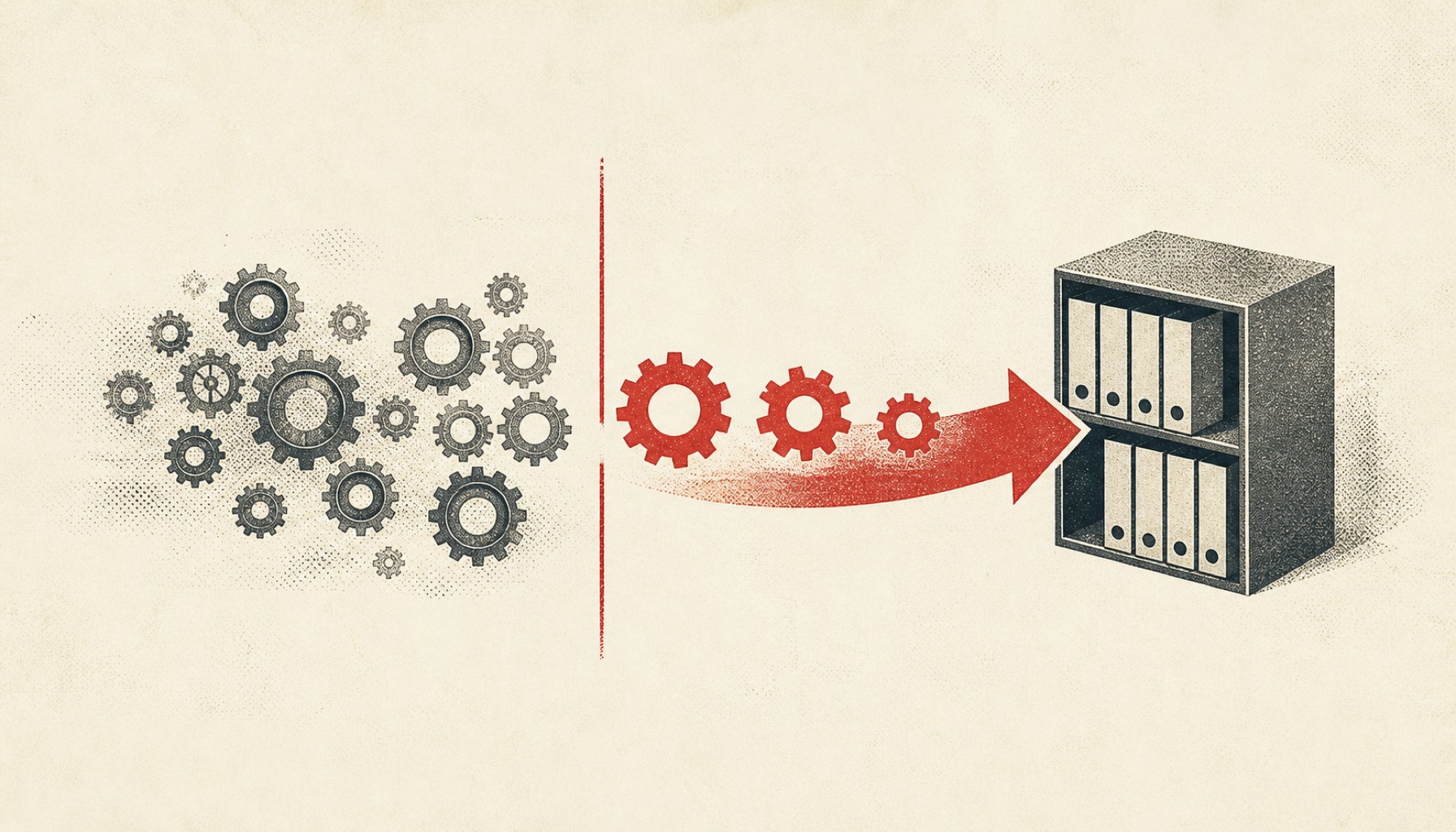
The figure sounds like a verdict on the entire technology, yet it’s the opposite. The MIT research team evaluated roughly 300 publicly documented AI projects and interviewed executives across industries for the GenAI Divide report. The finding: 95 percent of pilots show no measurable impact on the bottom line. Not because the models are poor, but because they never reach the point where a process actually runs differently.
What is the GenAI Divide? The term describes the gap between widespread use and genuine value creation. Many employees use AI tools, yet few companies embed them in workflows so that costs, time, or quality shift measurably. High adoption, low transformation.
For mid-sized firms, this is both good and uncomfortable news. Good, because the missing piece doesn’t have to come from Silicon Valley. Uncomfortable, because it dismantles the usual excuse. Blaming absent impact on regulation or model maturity? That’s looking in the wrong direction. The real deficit sits between tool and daily routine.
Why marketing delivers the lowest return on investment
At this point I have to argue against my own field. Most AI budgets end up in marketing and sales because that’s where the tools are most visible and the hype is loudest. A campaign idea in minutes, ten ad texts at the push of a button, a persona without a workshop. It feels like progress and rarely shows up on the balance sheet.
The MIT data points to a different lever. The measurable impact is created in the back office, in document-heavy routines, in finance processes, in service. Where half an hour of manual work per transaction adds up to real time across a thousand transactions. These areas receive the least attention because they are unspectacular. An automated invoice receipt doesn’t win a creativity award.
A concrete example from our own engine makes it clear. An AI tool drafts ten ad variants in minutes-saving the first hour. But the conversion rate in the funnel doesn’t budge. It only moves once the variants are tested against real segments, cleanly mapped in the CRM, and actively steered. The measurable effect lies in that mechanism, not in the writing. Celebrating the saved hour confuses output with impact.
For a marketing department without corporate budgets, this doesn’t mean steering clear of AI. It means being brutally honest about what truly lowers cost per transaction and what merely creates the illusion of speed. The second question often leads you out of marketing altogether.
What the top 5 percent do differently
The successful projects share a few sobering traits. They start with a clearly defined process that currently wastes money or time, and only then look for the right tool. They more often buy a specialized solution than build one in-house-only to abandon it once the initial excitement fades. The MIT numbers are stark: off-the-shelf solutions achieve measurable impact in roughly two out of three cases, while internal builds manage it in only about one-third. And the winners clean the data foundation before slapping a model on top, because a model on dirty data just gets wrong faster.
The typical false start
- Start with the tool and then hunt for a use case
- Build in-house without a plan for maintenance and operations
- Allocate budget where impact is hardest to measure
The winning pattern
- Start with an expensive process and then find the right tool
- Buy specialized solutions with a clear owner
- Clean the data before the model runs on it
What stands out is how little of this is about technology. At its core it’s process work with an AI component. The AI project dressed up as process work fails precisely because of that confusion. The difference decides whether, after six months, there’s a number on the balance sheet-or only a slide in the steering committee deck.
What SMEs take away from this
A mid-sized company doesn’t need its own research department to leap across the chasm. What it needs is a repeatable process where saving half an hour is worth the effort-and the courage to keep it small. One cleanly scoped use-case with an off-the-shelf solution beats ten parallel experiments that all stall in pilot purgatory.
In practice, that means three things. Name the single most expensive recurring process before you talk tools. Pick a solution that someone else maintains-outside your own walls. And measure how long the process takes today so the impact isn’t just a gut feeling later. Stick to that order and you’re following the pattern of the few projects that actually deliver a number. Flip the sequence and you’ll pay for the demo that gets applause in the steering committee but no one in accounting has ever heard of.
Frequently Asked Questions
Where does the statistic that 95 percent of AI pilots fail come from?
From the MIT report The GenAI Divide: State of AI in Business 2025. It draws on executive interviews and evaluations of roughly 300 documented AI deployments, measuring the impact on profit-and-loss statements.
Is the failure due to poor AI model quality?
According to the study, no. The bottleneck is integration into existing workflows, not model performance. High usage meets low embedding in day-to-day processes.
Should I build AI in-house or buy it?
The data clearly favours buying. Off-the-shelf business solutions achieve proof of impact twice as often as internal builds, mainly because maintenance and operations are permanently secured.
Where does AI deliver the largest measurable impact inside a company?
In the back office. Document-heavy routines, finance and service processes pay off measurably, while marketing and sales may consume the biggest budgets yet rarely show a clear balance-sheet effect.
How should a mid-sized company launch an AI project the right way?
Start by naming the single most expensive recurring process and measuring its current duration. Then choose a maintained business solution instead of building your own. Only after that introduce the tool and compare the effect against the baseline measurement.
Editor’s Picks
Read more on MyBusinessFuture
MyBusinessFutureShadow AI in the Mittelstand: What the Secret Use RevealsMyBusinessFutureIncreasing the value of a company before succession with AIMyBusinessFutureTaking Over Instead of Starting: The Underestimated EntrepreneurshipMore from the MBF Media Network
cloudmagazinWindows 10: Doing Nothing Is the Most Expensive PathDigital ChiefsDigitalization as a CIO Responsibility: The Costly DACH ReflexSecurityTodayThe Splunk Vulnerability That Deletes Files Without LoginImage source: AI-generated (June 2026)
Translated from the German original using artificial intelligence. The German version is authoritative.


