
Samsung Q2: Memory Remains Scarcer Than Expected
6 min read
Samsung Q2: memory remains scarcer than expected. For buyers, the shortage matters less than the consequences for prices, lead times and supply contracts in Europe.
Das Wichtigste in Kürze
- Record quarter: Revenue 171.500 trillion won, operating profit 89.500 trillion won (Samsung Electronics, Q2 2026).
- Memory as the engine: Device Solutions/Semiconductor revenue 127.500 trillion won and operating profit 89.200 trillion won; focus on server despite tight capacity.
- HBM4 and HBM4E: HBM4 sales ramped up; first HBM4E samples delivered to major customers.
- H2 and 2027: Agentic AI and AI-infrastructure CapEx keep server DRAM, eSSD and HBM undersupplied.
- LTA signal: Multi-year contracts with top-5 datacentre customers; further large-scale deals in the pipeline.
Related: Cheap AI from China: What procurement must check · When a German AI model actually pays off
year-over-year operating profit (Q2 2026)
Source: Samsung Electronics, Q2 2026 Results
What Samsung reported for Q2
According to Samsung Electronics’ Q2 2026 figures, group revenue reached 171.500 trillion won, with operating profit at 89.500 trillion won-both all-time highs. Quarter-on-quarter, revenue rose 28 percent and operating profit 56 percent. Year-on-year, the surge was dramatic because the prior-year quarter was still mired in a weak memory cycle.
What is HBM? High Bandwidth Memory is ultra-fast stacked memory for AI accelerators and servers. It sits close to the processor and delivers far higher data throughput than classic server DRAM. This exact blend of HBM and server DRAM is driving today’s scarcity.
The growth engine is in the Device Solutions segment. Semiconductor contributed 127.500 trillion won in revenue and 89.200 trillion won in operating profit. Memory again hit record levels as Samsung prioritised scarce capacity for server products. DRAM and NAND both achieved all-time highs in bit shipments. At the same time, the company ramped HBM4 sales and, by its own account, shipped the first HBM4E samples to key customers.
Investments are chasing demand. Q2 CapEx totalled 16.800 trillion won, up 5.500 trillion won versus the prior quarter. Of that, 15.400 trillion won went to Device Solutions. Memory investments rose, among other things, for the Pyeongtaek fab and supporting infrastructure. If you’re still banking on “chip prices will fall again,” read this as the opposite: the manufacturer is expanding capacity yet still signalling persistent scarcity.
Crucial context for SMEs: the absolute won figures are group-level. The real leverage for mid-market buyers lies in allocation. When server and HBM demand dominate the production lines, commodity modules and enterprise SSDs get caught in the same capacity decisions. Distributors then prioritise large customers and framework agreements. Mid-market reorders slip back, even if the volume seems small.
Agentic AI and LTAs: Why Structural Scarcity Persists
Samsung expects robust server demand in the second half of 2026, driven by sustained AI infrastructure capital expenditure and the broader adoption of agentic AI systems. Server DRAM, enterprise SSDs, and HBM are projected to grow faster than supply, while mobile and PC demand will only partially offset this imbalance. Ultimately, the market is set to remain undersupplied.
Long-term take-or-pay agreements further tighten the situation. Earnings communications and investor relations reports highlight finalized contracts with the five largest global data center customers, alongside advanced negotiations with additional major buyers. For mid-market buyers, this means predictable capacity is first allocated to hyperscalers and AI platforms-late orders translate into residual volumes and extended lead times.
Samsung also anticipates that supply constraints could intensify through 2027, with the sharp rise in token generation by AI workloads serving as a key mid-term driver. More tokens mean more inference operations, more servers, more HBM, and additional high-speed memory. This isn’t confined to cloud environments: on-premises inference, edge boxes in manufacturing, and AI-capable industrial PCs demand the same memory mix.
| Signal | Q2 / Outlook | Mid-market Interpretation |
|---|---|---|
| Revenue / Operating Profit | 171.5 / 89.500 billion Won | Memory cycle has rebounded into a boom phase-budgeting for falling hardware prices is risky |
| Product Mix | Servers, HBM4, HBM4E samples | Standard DRAM and SSDs remain tied to AI allocation |
| CapEx | 16.800 billion Won, DS 15.4 billion | Expansion yes, easing no-capital spending follows scarcity |
| LTAs / Customers | Top-5 data centers secured, more in pipeline | Volume and timelines prioritized for major buyers |
Sources: Samsung Electronics Q2 2026 Results and earnings call materials; analysis by MyBusinessFuture.
Where mid-sized companies are already feeling the bill
The second page of the memory rally is showing up in the equipment business. Samsung itself reports growing sales in mobile and network segments, yet faces margin pressure from expensive components. That same cost logic is hitting DACH companies: industrial PCs, edge-AI controllers, NAS and backup systems, GPU servers for pilot projects, and replacement storage for existing fleets are all getting pricier or arriving later.
Then there’s energy and location. More local inference means more power-and often more cooling in the server room. Bringing workloads back in-house to cut token costs doesn’t automatically save money. Memory, accelerators and energy costs all land in the same business case. Leave any of the three out, and every “AI saves staff” calculation is incomplete.
Procurement and IT shouldn’t wait for the next price dip. Vendor messaging is pointing to persistent shortages and multi-year visibility for large customers. If you’re planning bigger roll-outs in 2027, start looking for alternatives today: qualified SKUs, second-source suppliers, cloud-bursting for spikes, and clear priorities on which workloads truly need on-prem storage.
Energy and location: the invisible cost block
More memory and more accelerators on-site mean measurably higher power draw. Bringing inference back from the cloud only cuts token costs if electricity price, cooling and utilization are included. In energy-intensive operations this collides with existing grid fees and whether the server room has any spare capacity at all.
For senior management it’s a control problem. IT requests hardware for AI pilots. Facilities counts kilowatt-hours. Procurement sees rising storage prices. Without a shared spreadsheet each department acts alone-and the project shows up in the next forecast as a surprise. Samsung’s messaging on sustained AI-infrastructure demand is therefore also a signal to energy managers: capacity planning belongs in the same calendar as memory procurement.
Three checks for procurement, IT and executive teams
1. Catalog critical SKUs. List server DRAM modules, HBM-dependent systems, enterprise SSDs and edge devices with AI components. Flag anything that must be replaced or expanded by Q1/Q2 2027. Without this list, negotiations are blindfolded.
2. Lock in supply. Ask distributors and OEMs for firm delivery windows and single-source dependencies. Check whether framework agreements or pre-reservations are possible. In parallel, identify which workloads can shift to cloud or rented GPU capacity if hardware slips.
3. Recalculate the total budget. Line up hardware, electricity, cooling and ongoing token costs side by side. Agentic-AI projects rarely fail at the demo stage; they stumble on the second wave-more memory, more instances, more energy. Samsung’s numbers are an early indicator that this second wave will cost more than the 2024/2025 budget assumed.
The next decision
Samsung is setting the tempo for the memory market. The beat is this: AI infrastructure and agentic systems tie up capacity, prices and schedules. For executive teams and IT the choice is clear. Either lock in critical hardware and supply paths now, or accept that projects in 2027 will hit memory limits long before the software does. Waiting in this cycle only pushes the risk into the next forecast.
Frequently Asked Questions
Does memory scarcity only affect hyperscalers?
No. Hyperscalers are the first to lock in large volumes of HBM. Mid-sized companies feel the impact through higher prices and longer lead times when upgrading servers, deploying edge AI, industrial PCs, or expanding storage.
What does “agentic AI” mean for storage needs?
Agentic systems generate more interaction steps and therefore more inference tokens. This drives demand for server DRAM, fast SSDs, and HBM-not just training clusters in the cloud.
Should mid-sized companies now invest in their own GPU servers?
Only if the business case is rock-solid, covering memory, power, and operations. A hybrid approach-secure on-premises hardware plus cloud burst capacity-often proves more resilient than a large in-house build without guaranteed supply.
Which figures can be relied on?
Revenue, operating income, segment contributions, and CapEx are drawn from Samsung Electronics’ Q2-2026 disclosures. Outlook statements on scarcity and agentic AI reflect manufacturer forecasts and should be read as such.
Editor’s Reading Picks
- Cheap AI from China: What procurement must check
- When a German AI model actually pays off
- China+1 math: When a second site makes sense
Read more on MyBusinessFuture
MyBusinessFutureFor manufacturers who want more – How GTIA membership strengthens the entire partner networkMyBusinessFutureNIS-2 Registration: What the Executive Suite Must Do NowMyBusinessFutureVerivox and ThoughtSpot: Business Intelligence of the Next GenerationMore from the MBF Media Network
cloudmagazinSmall models devour big GPU budgets through pre-allocationDigital ChiefsThe hyperscalers’ billion-dollar bet-and your cloud billSecurityTodayHugging Face breach: Alert triggered, triage stalled
Editor's Picks
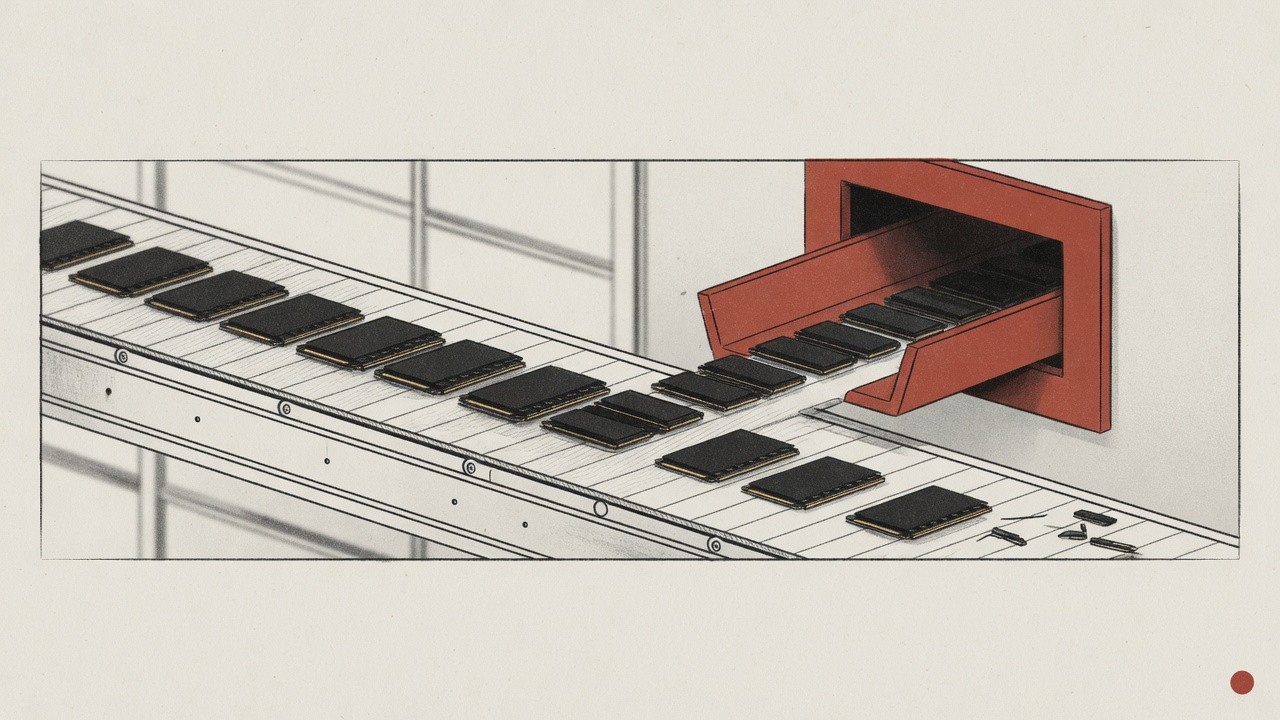
Bildquelle: AI-generated (July 2026)
Translated from the German original using artificial intelligence. The German version is authoritative.

