ERP Systems: Traditional ERP in the Food Retail Industry
6 min read
The German food retail sector generated around €294 billion in revenue in 2024 and remains one of the most operationally demanding industries. Fresh products, short delivery cycles, volatile procurement prices, and high order volumes collide with complex logistics and rising demands for transparency and traceability. Traditional ERP systems, designed for stable industrial processes, are reaching their structural limits in this environment.
Key Takeaways
- The German food retail sector generated around €294 billion in revenue in 2024 (HDE 2025).
- Up to 12 percent of all food is lost along the supply chain, a significant portion due to process and system gaps (BMEL 2024).
- Since 2023, Article 18 of EU Regulation 178/2002 mandates seamless batch traceability within four hours.
- Traditional ERP systems often handle fresh logistics, expiry management, and deposit processes only through extensive customization.
- Framework-based ERP platforms enable adjustments without update risks and reduce shadow IT like Excel spreadsheets.
- Automating ordering, pricing, and route planning is the decisive lever against margin pressure.
What Are ERP Systems?
ERP systems in 2026 are a tangible lever for companies because the topic directly hinges on stable IT operating models and concrete modernization steps. The article uses synaforce as an example to show which requirements, KPIs, and operational measures matter in practice.
The Reality of Food Retail
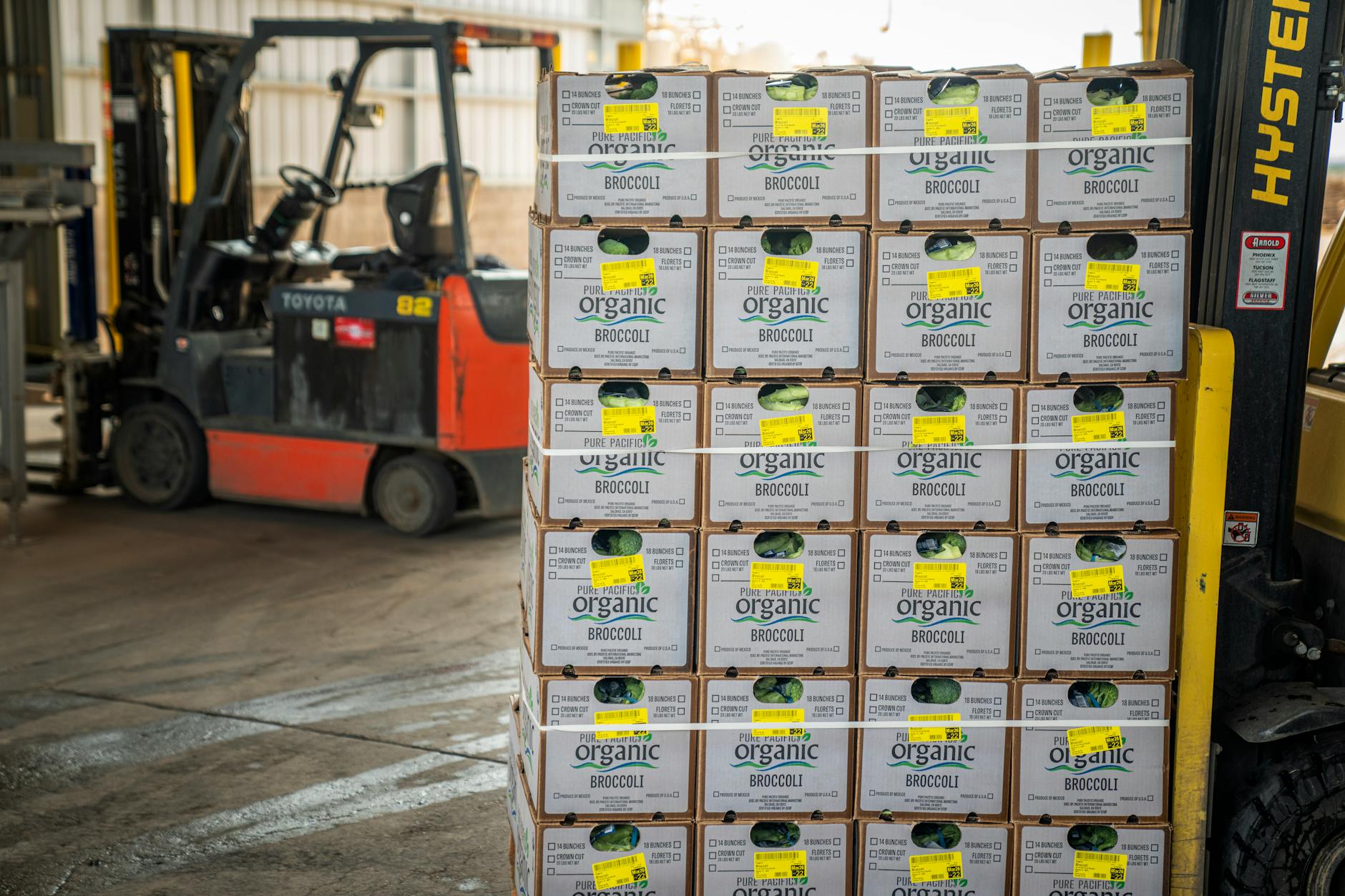
Food retail means handling highly sensitive goods. Products have limited shelf life, deliveries often occur within tight time windows, and prices can change daily. At the same time, customers expect real-time updates on availability, delivery times, and terms.
This reality creates significant operational complexity. An ERP system, for example, must simultaneously support requirements such as:
- batch and expiry-date management for seamless traceability
- next-day deliveries for fresh goods
- dynamic pricing based on current procurement costs
- route planning that accounts for refrigeration zones and delivery windows
- deposit management for reusable containers and transport equipment
It’s precisely this combination of time pressure, product demands, and logistical complexity that pushes traditional ERP architectures to their limits.
Why Legacy ERP Systems Hit a Wall
Many traditional ERP systems rely on rigid process logic and standardized modules. This structure works well in stable industries with clearly defined workflows. In food retail, however, exceptions, special cases, and last-minute changes are part of daily operations.
Typical pain points emerge quickly:
- manual interim steps in freshness processes
- lack of real-time visibility into inventory and supply chains
- complex adjustments to pricing logic or product ranges
- limited automation in ordering and delivery workflows
As a result, staff often coordinate processes outside the system. Excel sheets, supplementary tools, or manual coordination become the norm. That’s where inefficiencies and error risks creep in. Industry observers call this shadow IT: processes officially meant to run inside the ERP end up managed via spreadsheets and email chains.
Regulatory pressure adds another layer. Since the EU’s General Food Law (Regulation 178/2002) came into force, food companies must trace every batch from raw material to end customer within hours. What’s a standard query in a modern framework becomes a custom project requiring external consultants in older ERP systems.
Integration becomes the central challenge
Another critical issue is integration. Modern food companies operate with a wide array of digital systems: online shops, mobile inventory tracking, point-of-sale terminals, logistics solutions, BI systems, and supplier platforms. Each of these systems has its own data formats, interfaces, and update cycles.
An ERP must not only connect these systems but also intelligently consolidate their data. When integration is lacking or overly complex, data silos emerge. Decisions are then based on incomplete information, while operational processes become unnecessarily complicated. Procurement works with different inventory data than scheduling, accounting sees delayed revenue, and management receives reports with a two-day lag.
Especially in food retail, where speed and transparency are decisive, a fragmented system landscape can quickly turn into a competitive disadvantage. Companies that cannot provide seamless EDI connectivity to major retail chains risk losing shelf space. Those relying on manual processes for deposit accounting sacrifice liquidity.
“We want to offer our partners even more to succeed in the market. With our new partner program, we’re not just providing the next-generation ERP with maximum flexibility – we’re also building a powerful network that creates real added value.”
Peter Hartl, CSO Multidata
Automation as the key to efficiency
The growing complexity of the industry can only be mastered in the long term through automation. Orders, pricing calculations, inventory movements, and delivery processes must run with minimal manual intervention.
Automated processes deliver several decisive advantages:
- lower error rates
- faster response times
- better scalability as order volumes rise
- transparent data flows across all departments
In food retail, where margins are often under pressure, operational efficiency becomes a decisive competitive edge. Systems therefore need to do more than provide functions – they must intelligently orchestrate entire process chains. A real-world example: a mid-sized fresh-logistics provider that migrated from a rigid standard ERP to a framework solution improved its route planning by 15 to 25 percent, according to industry experience, because delivery windows, cooling zones, and customer preferences now function as genuine system parameters instead of manual post-processing corrections.
Real-world Perspective: Fresh Logistics and Distribution
A look at real-world operations reveals just how far standard ERP systems fall short in the food sector. After a failed ERP migration, fourlande GmbH – a wholesaler specializing in fresh dairy and delicatessen products – deliberately switched to a framework model. The deciding factor? Processes like batch traceability and best-before-date management had to be mapped exactly as they occur in fresh logistics, not in some idealized standard version.
The results are measurable. When deposit logic, dynamic pricing, and route planning are handled in a single system, companies don’t just cut down on Excel spreadsheets – they also slash the number of complaints stemming from interface gaps. In wholesale, order accuracy is the key to customer retention. A picking error costs more than the margin on a single shipment; it erodes trust with retail chains that can – and will – switch suppliers at the slightest hiccup.
On the distribution side, ADN Distribution GmbH demonstrates how highly variable pricing logics and lightning-fast workflows can coexist within a framework. While ADN isn’t a food retailer, the demands for dynamic pricing and rapid response times mirror those in value-added distribution. The bottom line: in sectors with high process variance, flexibility trumps standardization every time.
What Decision-makers Should Check Now
For CEOs and IT leaders in food retail, a structured audit of the current system landscape is time well spent. Three questions help gauge readiness: first, how many processes are officially run in the ERP but actually handled via Excel, email, or shadow IT? Second, what are the annual customization costs, and how often do updates overwrite those tweaks? Third, which regulatory requirements come into force in the next 18 months, and can the current system meet them without extra effort?
If hesitation creeps in on more than one of these, a strategic choice looms. Switching to a framework ERP isn’t an end in itself; it’s an investment in operational agility. The longer the decision is deferred, the higher the technical debt climbs – and the harder the migration becomes, as legacy systems accumulate ever more custom logic.
The ROI Case: Why the Switch Pays Off
At first glance, a flexible ERP feels like a major project. In reality, costs can be recouped through three classic levers. First, staff efficiency: automating manual handoffs saves measurable hours in scheduling, procurement, and accounting. In mid-sized firms with 100–200 employees, that often equals half to a full FTE per year.
Second, error reduction. Every manually maintained price list, every email-passed order, every Excel-based deposit settlement is a potential failure point. In food retail, an error doesn’t just mean a booking variance – it often means outright product loss as fresh goods spoil in the interim. Shrinking errors to under one percent protects six-figure margins.
Third, transparency. An integrated ERP delivers real-time KPIs instead of weekly reports. Knowing which product lines are profitable today and which routes will run at capacity tomorrow lets leaders act, not react. That strategic capability is the real value of a modern ERP – and it’s nearly impossible to retrofit into a standard system.
Conclusion: Food retail needs flexible ERP architectures
The demands on food retail will continue to rise. New sales channels, increasing customer expectations, and growing regulatory requirements are steadily increasing the complexity of the industry.
Companies therefore need ERP systems that are flexible, integration-capable, and automation-oriented. Instead of rigid standard solutions, food retailers require platforms that adapt to real-world processes and can be continuously developed further. Framework-based ERP systems like MD-Premium address this precisely: open, extensible, and update-safe.
Get a compact overview of typical process requirements in food retail with our whitepaper – from expiry date and batch management to deposit logic and route planning – and see how modern ERP frameworks map these challenges in practical terms: www.multidata.info/industry/food
Frequently Asked Questions
Why do classic ERP systems often fall short in food retail?
Classic ERP systems are designed for stable, standardized processes. In food retail, exceptions dominate: expiry date management, batch traceability, dynamic pricing, deposit processes, and freshness logistics. These requirements can only be met with extensive customization that introduces new risks with every update.
What distinguishes an ERP framework from a standard ERP?
A framework provides the underlying logic and allows industry-specific adaptations that remain update-safe. Standard ERP systems require customization for every deviation, which must be maintained during releases. Framework approaches reduce total cost of ownership and accelerate adjustments.
Which regulatory requirements specifically apply to food companies?
Article 18 of EU Regulation 178/2002 mandates seamless traceability within short deadlines. Additional requirements include the EU Food Information for Consumers Regulation (LMIV), organic certifications, deposit regulations, national hygiene standards, and industry-specific audits such as IFS Food. An ERP must operationally map these documentation obligations.
What role does EDI play in food retail?
EDI integration is a prerequisite for listings with major retail chains. Orders, delivery notices, invoices, and deposit data are transmitted via EDIFACT messages. Without seamless EDI processes, manual rework, delayed payments, and in some cases delisting can result.
How can switching to a flexible ERP be realistically planned?
Migrations are best initiated with a clearly defined pilot area, such as a product category or a single location. Key factors include process analysis before selection, a robust data cleansing plan, and a partner who brings industry expertise and framework know-how. Typical projects take nine to eighteen months.
Editor’s Reading Picks
Read more on MyBusinessFuture
MyBusinessFuturesynaforce: Successful Market Entry in Just One YearMyBusinessFutureData Act: German IoT Makers Must Comply by 2026MyBusinessFutureMicrosoft Copilot: 15 Million Users – But Only 3.3% PayMore from the MBF Media Network
cloudmagazinGoogle counters Meta with top AI at half the priceSecurityTodayWhen Paid AI Routers Inject Malicious CodeDigital ChiefsMicrosoft: Germany Is EU’s Top Cyberattack TargetSource of cover image: Pexels / Mark Stebnicki (px:11678431)
More on this synaforce topic
Further insights, services and practical examples are collected by synaforce on IT infrastructure and managed services.
Translated from the German original using artificial intelligence. The German version is authoritative.