
When Retrofitting Beats Buying New Machinery
6 Min. Read Time
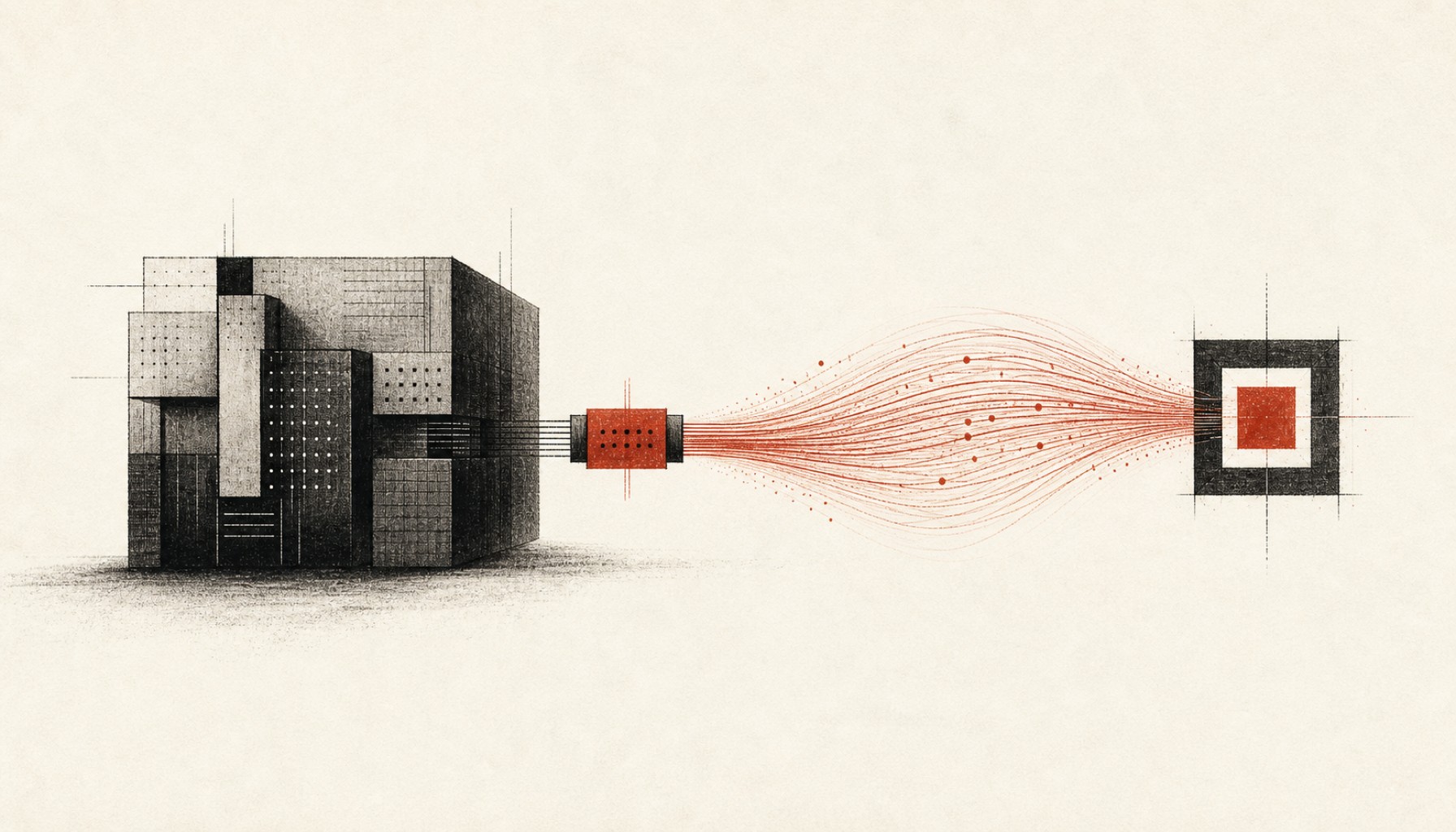
When a machine from the nineties is still running cleanly but delivers no data, two options usually present themselves: replace it at high cost or keep operating it as before. Both paths are, in most cases, either expensive or blind. The real return lies in a third option that mid-sized manufacturers often overlook. Retrofit the existing asset with sensors and data connectivity-at a fraction of the cost of a new machine. The technology itself is rarely the main challenge. The real question is which machine to start with and what the data are actually meant to achieve.
Key Takeaways
- The leverage lies with the existing machine. Sensors plus gateway typically cost a low four-figure sum per asset. A new machine quickly runs to ten or a hundred times that amount. As long as the mechanics are sound, retrofit wins on cost.
- Data without a question become a data graveyard. Before installing the first sensor, define which decision the data should improve. Collecting data for its own sake only pays for dashboards nobody opens.
- The business case is proven on a single machine. A pilot on the bottleneck asset with a measured baseline beats a plant-wide rollout. Scale only once the first set of numbers holds up.
RelatedPredictive Maintenance in Mid-Sized Manufacturing: The 100-Day Entry / Digital Twins: Optimising and Maintaining Industry 4.0 Assets
I regularly sit down with managing directors facing exactly this decision. Their shop floors are full of machines that still run perfectly yet remain black boxes. No one knows how heavily they are actually utilised, when the next breakdown will occur, or why scrap rates rise during the night shift. The reflex is to push the problem into the next investment round and wait for a new machine. In most cases, however, the answer already sits on the floor-if you approach it correctly. Retrofit simply means equipping an existing machine with sensors, a small industrial PC and a data connection so it can start communicating. Five critical points along this path decide whether projects succeed or fail.
1. Start with the Bottleneck Machine, Not the Entire Fleet
The most common and expensive mistake is the big-bang approach. Trying to connect thirty machines at once ties up capital and nerves long before the first real insights appear. The smarter route runs in the opposite direction. Focus on the single asset that sets the pace of production-usually the bottleneck where any downtime immediately shows up as lost output. That is where the leverage is greatest and the benefits become visible fastest.
This machine becomes the pilot. It delivers the baseline against which every later effect can be measured. It also supplies the proof for the second and third assets, because the numbers now come from your own shop floor rather than a vendor presentation.
2. Clarify the question before you attach the first sensor
With sensors now so affordable, many companies measure everything and use nothing. A mountain of unused data is simply money wasted. Before placing the first order, answer one question: Which decision needs to improve? For unplanned downtime, track vibration, temperature, and current draw. For scrap reduction, focus on process parameters and cycle times. For utilization, a simple on/off signal often suffices.
Sensors only make sense once the question is clear. This sequence determines whether the project ends in action or just another dashboard that no one opens after week two.
3. Honestly Compare Retrofit vs. Buying New
Retrofitting a single machine typically costs in the low four figures for sensors and gateway, plus installation and software for the first year. Overall, a solid pilot for a small line often lands in the mid five-figure range. Ongoing costs must also be factored in honestly: software licenses, calibration, and sensor replacements after a few years. Purchasing new equipment with the same production capacity still costs one or two orders of magnitude more. As long as the existing machine’s mechanics are sound, retrofit usually wins the calculation.
There’s a limit that should be stated openly. If the system is mechanically at the end of its life, spare parts are unavailable, or product quality demands a precision the old equipment can no longer deliver, then no amount of sensors can replace buying new. Retrofit doesn’t save a machine that’s due for replacement anyway. It extracts data value from a machine that can still run for years.
4. Secure the funding, but build the case without it
Grants are available for digitalization in the Mittelstand. Federal and state programs support both consulting and implementation, sometimes covering substantial shares of eligible costs. This lowers the entry barrier and gives companies a solid reason to move forward rather than delay.
The real mistake is tying the business case to the subsidy. A retrofit that only works with funding doesn’t work at all. Treat grants as an accelerator, not the foundation. When the case stands on its own merits, the subsidy simply brings the return forward.
Why retrofits fail
- Collecting data without a clear question
- Broad rollout instead of a focused pilot
- Isolated solution with no link to MES or ERP
- No one responsible for reading the data and acting on it
What makes a retrofit work
- A bottleneck machine with a measured baseline
- A clear decision question before the sensor is installed
- Connection to existing systems instead of an isolated solution
- Someone who turns data into action
5. Plan who reads the data and who acts
Hardware is the smaller part. A retrofit lives or dies by what happens to the signals. If a vibration warning arrives at three in the morning and no one has defined who sees it or what they do, even the best data connection is worthless. This is especially true for false alarms: when the system reports harmless deviations too often, the team tunes out and eventually ignores genuine warnings as well. Before go-live, it is essential to clarify who monitors the analysis, how alerts reach the right person, and what action follows. Old machines also introduce a new dimension once connected: they become a security concern. The connection must be cleanly isolated from the production network from the outset, or the sensor creates an entry point that did not exist before.
This is where many projects fail. The technology works and data flows, yet the surrounding processes remain unchanged. Retrofit only delivers value when a signal leads to a decision-ideally a calm one made in the morning rather than a frantic response during downtime. Clarifying these roles in advance turns the retrofitted machine into a tool that reduces the team’s workload instead of adding oversight.
Frequently Asked Questions
Is retrofitting worthwhile even for very old machines?
As long as the mechanics are in good condition and the system is expected to run for several more years, yes. Age alone is not a disqualifier. The decisive factor is the overall condition: a robust machine from the 1990s can still be meaningfully equipped with sensors and a gateway. Only when the equipment is mechanically worn out or spare parts are no longer available does a new purchase become unavoidable.
How much does it typically cost to retrofit a machine?
Sensors and a gateway per machine usually fall into the low four-digit euro range, plus installation and software. A well-planned pilot for a small production line often lands in the mid five-digit range for the first year. The final cost depends on the number of signals required and how deeply the machine needs to be integrated with existing systems.
Does retrofitting require a new MES or ERP system?
Usually not. The whole point of retrofitting is to take a gradual approach without replacing everything at once. The upgraded machine connects to whatever systems are already in place. The key requirement is that the data does not remain isolated but flows into a platform where it can be combined with the rest of the production data.
What funding is available for digitalization in mid-sized companies?
Both federal and state-level programs in Germany offer grants that cover consulting and implementation of digitalization projects, sometimes subsidizing a significant portion of eligible costs. Specific conditions change regularly, so it is worth checking the latest offerings from the federal government and the relevant federal state before starting a project. The business case should nevertheless stand on its own, even without subsidies.
Read more on MyBusinessFuture
MyBusinessFuturePredictive Maintenance in the Mittelstand: The 100-Day OnboardingMyBusinessFutureDigital Twin: Simulating and Controlling Manufacturing ProcessesMyBusinessFutureTrumpf Ditzingen: Smart Factory Delivers 30% Efficiency GainsMore from the MBF Media Network
Digital ChiefsWhen Factory Floor and Data Center Become One NetworkcloudmagazinWhen the Data Center Breathes with the Power GridSecurityTodayThe Weakest Supplier Opens the Critical FacilityImage source: AI-generated (July 2026)
Translated from the German original using artificial intelligence. The German version is authoritative.


