
When Every Order Email Has to be Manually Entered into the ERP System
5 min read
Every morning, orders land in the inbox: as a plain-text email, a PDF, or a scanned form. In customer service, someone manually enters each line into the ERP system. It takes hours, produces transposition errors, and ties up people who should be advising customers instead of typing. These order emails are dark data-unmeasured, unstructured, and expensive. A language model can prepare the order data, but it only becomes viable when a strict data format disciplines the output and a human gives final approval.
Key Takeaways
- The problem. Orders from email, PDF, and scans are manually processed in customer service-errors and lost hours included.
- The pattern. A language model reads unstructured input, a JSON schema enforces a fixed output format, validation checks it, and a human approves.
- The context. The schema secures the structure, not the accuracy. The human in the loop remains the ultimate safety net.
Related:When the agent books the incoming invoice themselves / Process optimization fails at the handoff
The orders nobody counts
In many mid-sized companies, order intake runs through a shared inbox. Customers specify what they need-sometimes as a clean table, sometimes as running text, often as a photo of a handwritten delivery note. Inside sales reads, categorizes, and types. On Monday mornings, the backlog grows because the weekend’s orders pile up.
Three recurring error patterns emerge. An item is misassigned because the customer’s part number doesn’t match the company’s. A quantity flips because packaging unit and piece count are confused. A price differs because the customer quotes an old offer. Each of these mistakes costs more later than the minute it took to type. If you know your process costs, you’ll recognize this as a silent line item-akin to the ERP maintenance trap in mid-sized firms.
How AI reads and the format disciplines it
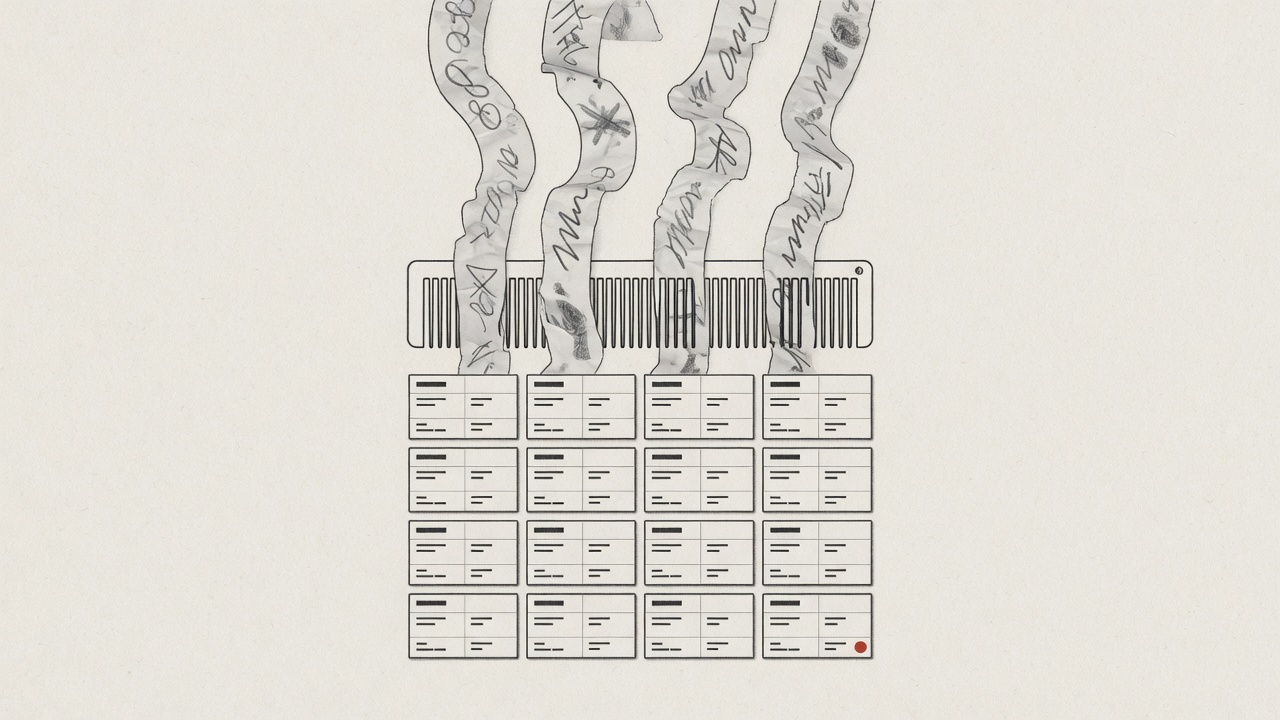
The underlying pattern isn’t tied to any single vendor. It follows four clear steps. First, the ERP synchronizes via an email interface like Microsoft Graph or IMAP with the mailbox and ingests new messages including attachments. Next, a language model analyzes the content against predefined instructions. The model then returns the recognized data not as free-form text but in a strict JSON format. Finally, a validation step checks the result, writes it to an intermediate table, and either automatically or after manual approval creates the order.
The decisive trick is the enforced schema. A language model tends to answer in free-flowing prose. A JSON schema prescribes every field that must be populated. What started as chatter becomes a machine-readable structure. The format is disciplined, not the truth of the content. The schema eliminates free-form answers and slashes format errors. It doesn’t replace expert review. Even complex cases can be handled: an initial prompt classifies the email as an order, ticket, or document and routes it accordingly. Push the idea from inbox to booking a step further and you quickly arrive at the question of when an agent should book the incoming invoice themselves.
| Criterion | Manual | OCR Template | RPA | Language Model + Schema |
|---|---|---|---|---|
| Free-text email | works | weak | weak | strong |
| Many format variants | costly | per template | quickly fails | flexible |
| ERP integration | full | partial | set-up required | connector-dependent |
| Maintenance effort | staff | high | high | prompt, schema, validation |
The comparison shows general tendencies. With only a handful of stable order formats, an OCR template often remains the more cost-effective choice.
How Providers Implement the Pattern Today
Several provider types are taking this approach. Document-processing specialists like ABBYY or Konfuzio extract data from invoices and forward it. Automation platforms such as UiPath or Microsoft Power Automate chain steps across systems. Large ERP vendors build their own modules, often around SAP or Microsoft Dynamics. ERP manufacturers, in turn, wire the pattern directly into their own platform, where it lands in order processing without an intermediate layer. Which path fits depends on the degree of integration into your own ERP, data sovereignty, and the maturity of human approval-not on the loudest promise. That the tool is rarely the problem becomes clear when process optimization fails at the handoff.
The Austrian software house Multidata implements this pattern on its MD-Premium platform. According to the manufacturer, the mailbox synchronizes via Microsoft Graph, a European Mistral model analyzes the email and returns the data as strict JSON. If the article number is missing, the system identifies it using alternative data points such as delivery address, customer number, VAT ID, or EAN. A validation step catches typical stumbling blocks. If a customer orders three units priced at 144 units, the system recognizes the packaging unit and corrects it to three times 48. It’s details like these that determine how much automation truly delivers.
European Doesn’t Automatically Mean Compliant
Choosing a European model like Mistral is more than symbolic for mid-sized companies. It reduces dependence on non-European providers and cuts to the heart of the debate on digital sovereignty. Yet the “Made in Europe” stamp alone doesn’t resolve the legal question. Four criteria must be kept distinct: a European model, hosting within the EU, training without customer data, and a supply chain without subprocessors outside the EU. Only when combined do they form a robust data-protection line, secured via a data-processing agreement. Before the first real customer email runs through the model, anyone introducing AI in customer service should clarify these four points in writing. Otherwise, a variant of shadow AI in mid-sized firms looms-this time with approval.
Where the Human Must Remain
The biggest misconception is to confuse the pattern with safety. A model can deliver formally valid JSON containing the wrong customer. The structure is correct, the content is not. That’s why the intermediate table with manual approval isn’t a cosmetic flaw-it’s the load-bearing component.
What Can Be Automated in Advance
- Convert free-text, PDF, and scan data into a fixed format
- Recognize known patterns even with shifting layouts
- Pre-sort inputs by order, ticket, or document
Where Human Judgment Is Required
- Ambiguous assignments with identical delivery addresses or duplicate EANs
- Price and quantity deviations with commercial consequences
- Special packaging and customer-specific logic outside standard rules
Setting the confidence threshold too high automates errors into the booking. Setting it too low sends every email back to humans with no gain. The right threshold is a business decision, not a technical one.
Four questions to ask before you start
These four questions separate a worthwhile project from an expensive experiment. If you can answer them, you already know half the solution.
- How many orders land in the inbox every day? How many format variants are included?
- Which fields can the system book automatically, and which require approval?
- Where are the model and data stored? Is the data-processing agreement in place?
- Who measures the correction rate so automation doesn’t turn into flying blind?
The order email doesn’t vanish; it’s either typed by hand or read by a machine that a human still has to check. Set the pattern up cleanly and you claw back time for what no model can do: answering queries, handling complaints, and giving advice. Skip the approval step and skip the measurement and you simply move the error to a place where nobody sees it anymore.
Frequently Asked Questions
What does AI-assisted order entry actually mean in practice?
A language model reads incoming orders from email, PDF, or scan, extracts the relevant data, and returns it in a fixed format. After validation, it becomes an order in the ERP-either automatically or after manual approval.
Why use a JSON schema if the AI understands the text anyway?
Without it, the language model would answer freely. The schema defines every field and makes the response machine-readable; it secures the structure, not the truth-validation and human approval still handle that.
Does a European model like Mistral automatically comply with GDPR?
No. The model’s origin is only one piece of the puzzle. What matters just as much are the processing location, the data-processing agreement, the sub-processors, and whether customer data was used for training.
At what volume does the switch pay off?
The higher the daily order volume and the more format variants, the sooner the model becomes cost-effective. With only a few stable order formats, a classic OCR template often remains the cheaper option.
Editor’s Reading Picks
Read more on MyBusinessFuture
MyBusinessFutureInvestment backlog: How AI uncovers hidden budgetsMyBusinessFutureAI-Evaluation Before Succession: Preparing the Sales ValueMyBusinessFutureWithout App Intents, your app will be invisible to SiriMore from the MBF Media Network
cloudmagazinGermany Stack Goes Live: €250 Million for the Federal AI CloudDigital ChiefsVMware under Broadcom: The Exit Plan as a LeverSecurityToday72 Percent of Cyber-defence Comes from AbroadImage source: AI-generated (June 2026)
Translated from the German original using artificial intelligence. The German version is authoritative.

