
Reboot Germany: €735 Billion, Three SMEs, and the Crisis Question
10 min. reading time
Insolvencies are rising, skilled workers are scarce, and the economy is sputtering. Germany is in crisis, the headlines say. What they leave out: 105 companies have made investment commitments totaling 735 billion euros for Germany as a business location. CLAAS is putting 320 million into research, even though revenue is declining. TRUMPF is investing 186 million in its Ditzingen headquarters, even though the market is collapsing. And creditor claims in insolvencies fell in 2025, not rose. The panic narrative has begun to crack. We take a look at who is causing it.
The Key Points at a Glance
- 105 companies pledge 735 billion euros in investments by 2028 (Made for Germany, as of the end of 2025).
- Insolvencies rise by 10.3 percent, but creditor claims fall to 47.9 billion euros (Destatis 2025).
- CLAAS keeps R&D investments at 320 million euros, despite a slight decline in revenue (fiscal year 2025).
- TRUMPF is investing 186 million euros at its Ditzingen site, even though revenue is down 17 percent.
- Schüco generates 63 percent of its revenue internationally and grows service revenue by 29 percent.
- Manufacturing PMI at 51.7 in March 2026 – the strongest expansion in manufacturing since June 2022.
The Crisis Narrative and Its Blind Spots
Germany’s Federal Statistical Office counted 24,064 corporate insolvencies in 2025. That is 10.3 percent more than in the previous year and the highest level since 2014. The headlines were predictable: Germany was on the decline, the Mittelstand was breaking apart, and deindustrialization could no longer be stopped.
The numbers are correct. What is missing from the debate is the second half of the statistic: over the same period, creditor claims fell from 58.1 to 47.9 billion euros. So there are more insolvencies, but less economic damage per case. What that means: the supporting pillars of the economy are not collapsing. A stock of smaller companies that had been kept artificially alive since the pandemic through aid programs is being cleared out. That is painful, but it is not a structural crisis. It is a normalization.
The historical context makes the assessment even clearer: 24,064 insolvencies are the highest level since 2014, when 24,085 cases were registered. But in the crisis year 2009, there were 32,687. Germany is a long way from an insolvency wave comparable to the financial crisis. What we are seeing is a delayed market adjustment after three years of artificial stabilization through coronavirus aid, KfW loans, and energy price brakes. Painful for those affected, but not a sign of systemic failure.
What the economic data in March 2026 show is a picture full of contradictions. The ifo Business Climate Index fell to 86.4 points – the expectations component plunged more sharply than at any time in over three years, triggered by energy uncertainty and geopolitical tensions. At the same time, the Manufacturing PMI climbed to 51.7 points, its highest level since June 2022. New orders are growing faster than at any time in four years.
How does that fit together? Sentiment is nervous, but production is running. Executives are worried about the next twelve months, but buyers are ordering more material than they have in years. This is the typical picture of an economic turnaround: the real economy shifts before sentiment catches up. The Bundesbank forecasts significantly stronger growth from the second quarter of 2026 onward, driven by public investment and a recovery in exports.
These are not figures to celebrate. But they are not the picture of a country giving up, either.
735 Billion: What Lies Behind the Number
In July 2025, Christian Sewing (Deutsche Bank), Roland Busch (Siemens), Mathias Döpfner (Axel Springer), and Alexander Geiser (FGS Global) founded the “Made for Germany” initiative. At its launch, 61 companies made investment commitments totaling 631 billion euros. By the end of 2025, the initiative had grown to 105 members, and the commitment had risen to 735 billion euros by 2028.
“Germany needs a new operating system geared toward growth, technology, and competitiveness. The time for that is now. Politics and business must establish a new form of collaboration.”
Roland Busch, CEO Siemens (Ad Hoc News, July 2025)
The criticism of the initiative is justified and should not be glossed over. The industry publication Table.Media published a leaked internal communications document showing that many of the announced investments had already been planned before the initiative was founded. BASF had already decided to build a training laboratory, Bosch to convert a plant in Bamberg, and DHL to build a parcel center in Alsfeld.
The document included wording guidelines for participants: “Investment sums may fluctuate. What counts is the clear signal of willingness to invest.” The phrasing shows that the organizers themselves knew how thin the line between commitment and PR can be.
Even so, it would be wrong to dismiss the initiative as mere symbolic politics. 735 billion euros is not nothing, even if part of it would have been invested anyway. The true value of Made for Germany lies not in the total, but in the signal: companies such as BMW, Siemens, SAP, and Microsoft Germany are publicly backing Germany as a business location. At a time when the dominant narrative is “relocation,” that provides a counterweight.
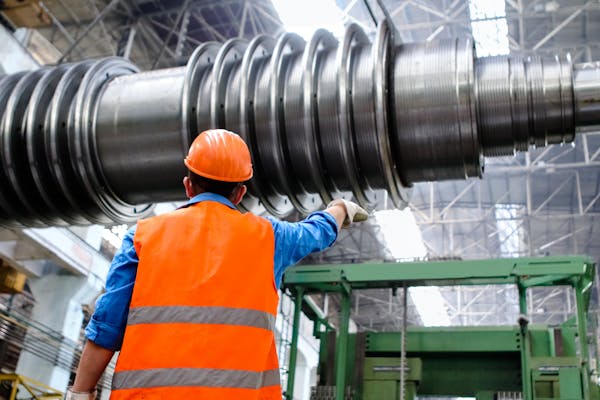
R&D even in a downturn. (Pexels)
CLAAS: 320 million in R&D despite declining revenue
CLAAS is a good example of how mid-sized companies invest without waiting for the economy to recover. The agricultural machinery manufacturer from Harsewinkel recorded a slight decline in revenue in fiscal year 2025, from 5.0 to 4.9 billion euros. Its response: 319.9 million euros in research and development. The third year in a row above 300 million.
What CLAAS is doing with the money is interesting. Two new fully automated production facilities went into operation: a prefabrication center in Harsewinkel and a high-bay warehouse in Bad Saulgau. At the same time, the company has built “CLAAS connect”, a digital ecosystem that enables cross-manufacturer fleet management.
Despite declining revenue, free cash flow rose by 32 percent to 252 million euros. That bears the signature of a family-owned company that thinks long term: not cutting investment with every economic slowdown, but building precisely when capacity and suppliers are available.
This is not a one-off decision, but corporate culture. CLAAS machines work in fields across 140 countries. When the core business is functioning, a family-owned company uses weaker quarters to increase vertical integration and reduce dependence on suppliers. The new facilities in Harsewinkel and Bad Saulgau are exactly that: less outsourcing, more control over its own value creation. In times of fragile supply chains, that is a strategic advantage, not merely an investment project.
TRUMPF: 186 million for headquarters, in the middle of a downturn
In 2022/23, TRUMPF generated record revenue of 5.4 billion euros in its 100-year corporate history. Two years later, revenue stands at 4.3 billion. A decline of 17 percent. The order situation in machine tool manufacturing is weak, and demand from China has collapsed.
What TRUMPF did during its boom phase says more than the current dip: 316 million euros flowed into property, plant and equipment. Of that, 59 percent went to Germany, primarily to the headquarters in Ditzingen. That is around 186 million euros for a location that others had already written off at that point.
Ditzingen employs around 5,900 people. During the boom phase, TRUMPF could easily have expanded into lower-cost locations. Instead, it invested in Germany. That is a deliberate location decision, not an automatic reflex.
The current revenue dip is cyclical, not structural. In the current fiscal year, Germany has once again become TRUMPF’s largest single market after temporarily falling behind Asia.
What sets TRUMPF apart from many competitors: the company invested countercyclically. During the boom phase, when every manufacturer was expanding capacity and prices for construction services were exploding, TRUMPF used its margins to modernize its home location. That is paying off now: while others have to consolidate sites during the downturn, TRUMPF has already completed its investment round and can focus on innovation.
Schüco: 63 Percent International, Yet Rooted in Bielefeld
At first glance, Schüco from Bielefeld is a counterexample. Only 37 percent of its revenue of 2.05 billion euros is still generated in Germany. 63 percent comes from international markets.
But this is not flight; it is strategy. Schüco internationalized at the right time and shifted its focus from pure product sales to the “lifecycle of the building envelope”. Today, the company no longer merely supports the construction of facades and windows, but the entire usage phase. In 2024, the service segment grew by 29 percent to 36 million euros.
Strategy 2030 focuses on circular solutions and digital lifecycle support. This is not a retreat from Germany as a business location. It is the model of a company that scales German engineering internationally and uses its home base as a center of innovation.
The 41.6 million euros invested in 2024 are flowing into precisely this digital transformation. Schüco is building digital twins for building envelopes, offering predictive maintenance for facade systems, and developing software that maps the entire lifecycle of a component. This is the kind of value creation that cannot be relocated to Romania or Vietnam. It requires engineers who combine materials science, software development, and building physics. And those are found in Bielefeld.
AI in the Mittelstand: Less Hype, More Impact

Manufacturing meets AI. (Pexels)
The turnaround stories of CLAAS, TRUMPF, and Schüco have one thing in common: digitalization is no longer a project, but part of corporate strategy. And that does not apply only to the big players. In 2026, 41 percent of German companies are already using AI. In 2024, the figure was still 17 percent. That is according to a Bitkom survey of 604 companies from early 2026. Another 48 percent are planning or discussing its use. Only 11 percent still consider AI irrelevant.
What this looks like in practice can be seen in the Green-AI Hub Mittelstand, an initiative of the Federal Environment Ministry. In December 2025, 20 pilot projects with companies ranging from 50 to 500 employees presented their results. KÜBLER GmbH from Ludwigshafen, a manufacturer of industrial heating systems with around 200 employees, developed an AI-based system configurator that reduces the material footprint by 15 percent. The software recommends the most resource-efficient system configuration to sales before production even begins. System 180 from Berlin, a manufacturer of modular furniture systems, uses AI-supported component recognition and saves 10 tons of steel and 65 tons of wood per year as a result. Across all 20 pilot projects, 320 tons of material were saved.
These are not press conference projects. These are manufacturing SMEs achieving measurable results with manageable budgets. Germany is adopting AI more slowly than the United States, but closer to industry. Deutsche Telekom and NVIDIA have jointly launched Europe’s first sovereign Industrial AI Cloud in Munich. German automotive suppliers are using AI-supported quality control. Mechanical engineering companies are developing predictive maintenance models based on their own operational data.
The key lies exactly here: domain knowledge plus AI tools. A heating system manufacturer in the Palatinate that has been collecting system data for decades has something no Silicon Valley startup can replicate. When it unlocks this data treasure with modern AI models, it creates a competitive advantage that can be defended for years. The Green-AI Hub program runs until 2029 and is continuously accepting new companies.
The Special Fund as a Turning Point
Alongside private investment, the government’s special fund for infrastructure and defense is fundamentally changing the framework conditions. 500 billion euros over twelve years, including 18 billion explicitly earmarked for digitalization. S&P Global titled its Europe outlook for Q1 2026 “Germany’s Fiscal Reawakening”. The Bundesbank expects “significantly stronger growth from the second quarter of 2026 onward, driven mainly by government spending and a recovery in exports”.
“From the second quarter of 2026 onward, economic growth will strengthen significantly, driven mainly by government spending and a recovery in exports.”
Joachim Nagel, President of the Deutsche Bundesbank (Bloomberg, December 2025)
International investors are also repositioning themselves. Amundi, one of the world’s largest asset managers, titled its 2026 analysis of Germany “Germany: Crisis Comes Opportunity”. This is not a German PR document, but the sober assessment of an asset manager with 2.2 trillion euros under management.
The combination of fiscal stimulus, falling energy prices and a stabilizing labor market is creating a window of opportunity. Not for blind optimism, but for targeted investment. Companies that act now are positioning themselves for the upswing. Those that wait risk entering the recovery phase without the capacity they need.
What This Means for IT Budgets in Mid-Sized Companies
The macro figures are impressive. But what does that mean for the CIO of a mid-sized company with 500 employees who is currently planning the IT budget for 2027?
First: The funding landscape has changed. KfW’s ERP promotional loan for digitalization has offered low-interest loans for AI projects, process digitalization and new digital products since July 2025. No minimum loan amount, application through the company’s principal bank, decision within a few weeks. The BMWK’s Mittelstand-Digital network offers free consulting in five modules, from digitalization strategy to IT security. These are not theoretical programs gathering dust in ministry brochures. The 20 companies in the Green-AI Hub have used them.
Second: The special fund does not flow directly into corporate accounts, but it changes the rules of the game. 18 billion for digitalization means: faster broadband, more modern administrative interfaces, better digital infrastructure. Anyone investing now in cloud migration or AI integration will encounter a significantly better environment two years from now than today.
Third: The companies in this article have one thing in common. They are not investing despite the crisis, but because of the crisis. Because capacity is available, service providers are hungry and competitors are hesitant. Anyone who postpones their ERP upgrade, cloud project or AI pilots until better times will find that, in better times, everyone starts at once and prices rise.
Reboot Germany: Why we are telling these stories
This article marks the launch of our new “Reboot Germany” section across all four MBF Media magazines: on MyBusinessFuture, in cloudmagazin, at Digital Chiefs and on SecurityToday. We tell the stories that get lost in crisis reporting: companies that invest instead of waiting. Executives who take responsibility instead of looking for someone to blame. Industries that transform instead of resigning themselves to decline.
Not as a counterprogram to criticism. The insolvency figures are real, the skills shortage is real, the regulatory hurdles are real. But just as real are 735 billion euros in investment commitments, family businesses that have believed in Germany as a business location for generations, and a fiscal reset that international analysts see as a turning point.
In the coming months, we will publish comeback portraits, CEO interviews and industry turnarounds. Four perspectives, one common thread: Germany has the substance to make the turnaround. What it needs now are the stories that show how.
Conclusion: Three questions for your next board meeting
The crisis narrative has a function: it creates pressure to act. But it tells only half the truth. CLAAS, TRUMPF and Schüco show that the German Mittelstand is not waiting for the economy to turn. It is investing, automating and internationalizing now in order to reap the rewards three to five years from now.
The pattern is the same at all three companies: invest countercyclically when others are cutting back. Strengthen equity when debt capital becomes expensive. Expand in Germany because engineering expertise and manufacturing depth are not available anywhere else in such a concentrated form. This is not nostalgia, but calculation.
What you should ask yourself this week:
1. Which project have we been putting off for months? Now is the time. Service providers have capacity, KfW offers funding, and the competition is still hesitating.
2. Where is our data treasure trove? KÜBLER took plant data and used it to build an AI configurator. What data have you been collecting for years without using it?
3. Are we investing countercyclically or procyclically? CLAAS and TRUMPF invest when it hurts. Those who only invest in boom years pay peak prices and enter the next dip without substance.
735 billion euros in investment commitments are not a blank check for optimism. But the signaling effect is real. Production is expanding, the funding framework is in place, and companies like KÜBLER show that measurable AI results do not require billions, but 200 employees and the will to get started.
Anyone talking about Germany should not just count insolvencies, but investments as well. The substance is there. Reboot Germany tells the stories of those who are turning things around.
Frequently Asked Questions
What is the “Made for Germany” initiative?
Made for Germany was founded in July 2025 by the CEOs of Deutsche Bank, Siemens, Axel Springer and FGS Global. The initiative now includes 105 companies that together plan to invest 735 billion euros in Germany as a business location by 2028. Members include BMW, SAP, Microsoft Germany and Bosch.
Why are insolvencies rising even though the economy is recovering?
The 24,064 insolvencies in 2025 are partly a delayed consequence of the pandemic. Government aid programs kept many companies artificially alive. At the same time, creditor claims fell from 58.1 to 47.9 billion euros, suggesting that smaller companies in particular are affected, rather than the economy’s main pillars.
What funding programs are available for digitalization in SMEs?
KfW’s ERP Promotional Loan for Digitalization offers low-interest loans with no minimum loan amount for AI projects and process digitalization. Applications are submitted through the company’s principal bank. In addition, the Federal Ministry for Economic Affairs and Climate Action’s Mittelstand-Digital network offers free consulting. Until 2029, the Green-AI Hub Mittelstand will support companies with AI pilot projects focused on resource efficiency.
What is the outlook for the German economy in 2026?
The economic data are sending mixed signals. The PMI Manufacturing index rose to 51.7 points in March 2026, the strongest expansion since June 2022. By contrast, the ifo Business Climate Index fell to 86.4, driven by geopolitical uncertainty. The Bundesbank forecasts 0.6 percent GDP growth for 2026, with acceleration from the second quarter onward due to the special fund.
What is the “Reboot Germany” section?
Reboot Germany is an editorial section spanning all four B2B magazines in the MBF Media network: MyBusinessFuture, cloudmagazin, Digital Chiefs and SecurityToday. It tells honest turnaround stories from SMEs and the tech industry: comeback profiles, CEO interviews and industry turnarounds. The section currently comprises more than 40 articles.
Read more on MyBusinessFuture
MyBusinessFutureHidden Champions: How 1,307 global market leaders are quietly weathering the crisisMyBusinessFutureModular Building: Solving Germany’s Housing CrisisMyBusinessFutureThe Digital State: Germany’s Administration in the 21st CenturyMore from the MBF Media Network
cloudmagazinGoogle counters Meta with top AI at half the priceSecurityTodayWhen Paid AI Routers Inject Malicious CodeDigital ChiefsMicrosoft: Germany Is EU’s Top Cyberattack TargetAll Reboot Germany Articles by Magazine
- MyBusinessFuture – SMEs, investments, economic policy
- cloudmagazin – cloud, edge computing, digital sovereignty
- Digital Chiefs – C-level perspectives, transformation, succession
- SecurityToday – cybersecurity as a business location advantage, NIS2, SOC
Featured image source: Pexels
Translated from the German original using artificial intelligence. The German version is authoritative.


