
CES 2025: AI Trends Transforming Business for Companies
3 min. read
Everyone present in Las Vegas or reporting from the show agrees: The CES 2025 is all about artificial intelligence. Many of the ideas aren’t new, but they are finally becoming suitable for the mass market.
Following the disappointing end of Germany’s CeBIT in 2018, the Consumer Electronics Show, or CES for short, in Las Vegas has gained even more significance as a consumer electronics and IT trade show. It has always been an event for major announcements of technology trends that find their implementation half a year later at Computex Taipei in January.
At the CES 2025, taking place from January 9 to 12 and attracting 130,000 industry professionals and journalists to the entertainment capital of Las Vegas, almost everything seems to revolve around AI. This doesn’t just mean chatbots or generative language models, which have dominated the conversation since late 2022.
Smart Fridges and Translation Glasses
As the trade magazine ChannelPartner notes, artificial intelligence is finding its way into an ever-wider range of everyday devices, from the mundane to the innovative. At CES 2025, Samsung, for instance, unveils a fridge that can recognize over 30 food items inside, suggesting recipes tailored to personal tastes and health needs. A quarter of a century earlier, German manufacturers like Liebherr and Siemens had similar ideas, albeit with the twist that the fridge would automatically reorder groceries. Struggling with language barriers? The “Rokid Glasses” from the Chinese company of the same name might be the solution. These stylish AR or AI glasses with translation functions are the stars among the smart glasses showcased at CES, as reported by heise.
The company, founded in Hangzhou in 2014, already won awards for Best Wearables and Best Electronic Products at CES 2018. The glasses unveiled this time bear the design signature of the Swedish design house Bolon, with a hint of the Ray-Ban Meta. The Rokid Glasses, of course, do more than just translate; they are even said to replace televisions or projectors.
Smart TVs to become even smarter at CES 2025
Today’s TVs, often already dubbed “smart,” are becoming even more intelligent. Korean giants LG and Samsung, for instance, have significantly enhanced their offerings. Their latest flagship models can now automatically recognize what’s playing and use AI to sharpen blurry sections or individual frames, such as a tennis ball or a hockey puck.
LG’s new OLED TVs in the evo series already feature technology that delivers superior brightness and black levels. They can wirelessly transmit both picture and sound at 144 Hz without compromising quality. Additionally, the new models support both Nvidia G-Sync and AMD FreeSync Premium. Other AI features include personalized picture and sound settings, as well as an integrated AI chatbot, as reported by t-online.
For even higher resolutions and refresh rates, however, a new HDMI 2.2 cable will likely be necessary. The updated HDMI standard is expected to offer a bandwidth of 96 gigabits per second, doubling the 48 Gbit/s promised by HDMI 2.1. It will take some time before the first devices with HDMI 2.2 hit the market.
“Everyone present in Las Vegas or reporting from the show agrees: CES 2025 is all about artificial intelligence.”
VR and Robotics Are Converging
Advancements and innovations in robotics are, of course, always a topic at the CES. Pets left alone at home can have a playmate with Oro from the US firm Ogmen, which can, for example, shoot tennis balls. A camera and an AI chip ensure that no porcelain or similar items get broken in the process. A motorized stroller from the Canadian startup Glüxkind can rock babies to sleep and, equipped with a camera, provide additional braking assistance on downhill paths. Gaming enthusiasts can look forward to new VR headsets that can be linked with a kind of full-body robot for a fully immersive experience, even allowing users to stroke virtual cats.
A perhaps more useful gadget is a type of exoskeleton with a built-in motor that can serve both as a mobility aid for individuals with physical limitations and as a training aid for marathon runners, depending on the need. What is also noticeable at this year’s CES, according to toptech, are increased efforts towards sustainability and making smart home technology more accessible to people. Another trend is the improvement of health, fitness, and lifestyle through new sensor technology.
How many of the innovations and new developments shown at the CES will serve the B2B sector remains to be seen. However, it is worth remembering that Nvidia, which initially gained prominence with graphics processors for gaming, is now one of the world’s most valuable companies and a major beneficiary of the later GenAI boom.
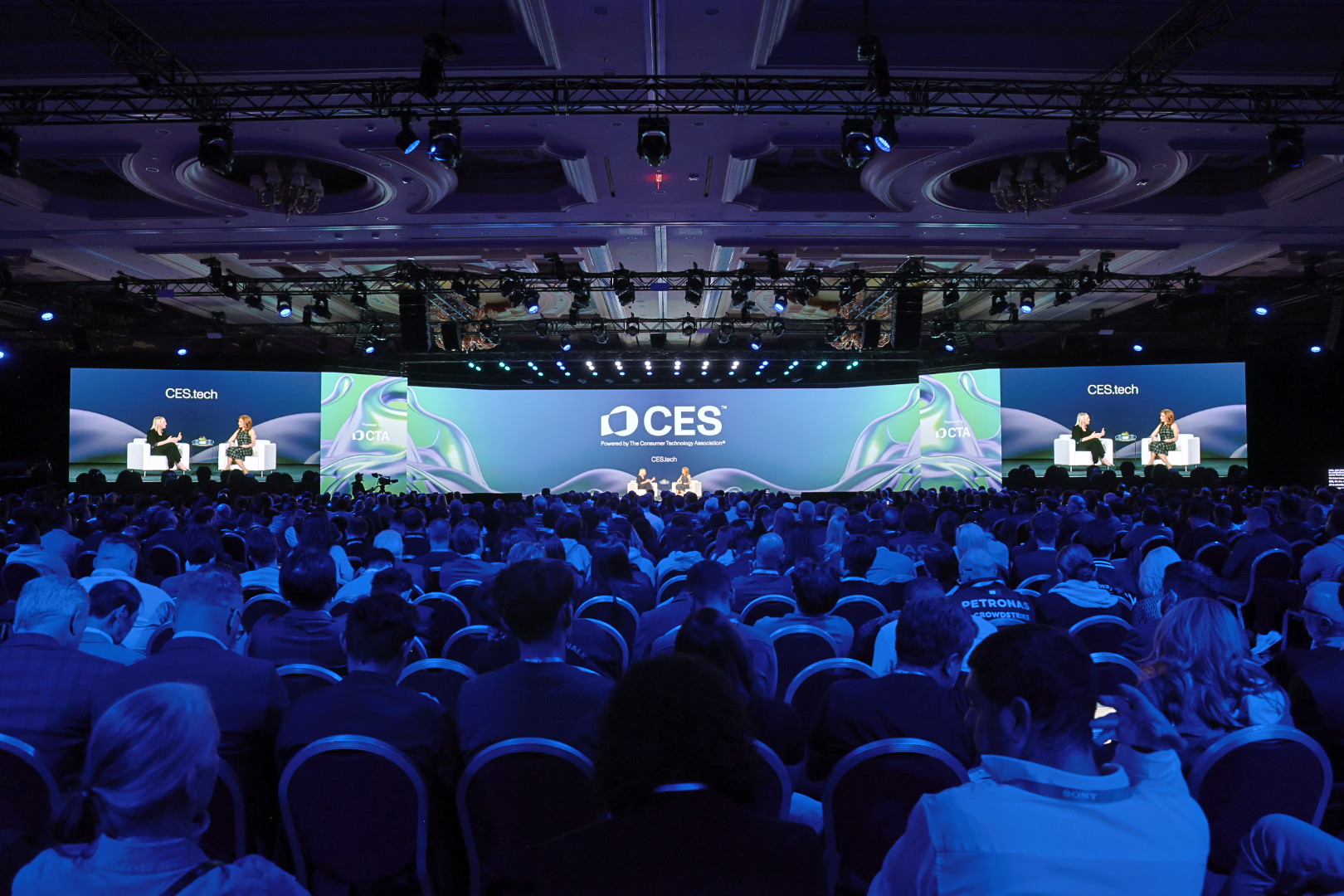
Source of title image: Consumer Technology Association (CTA)®
Translated from the German original using artificial intelligence. The German version is authoritative.
Also available in