
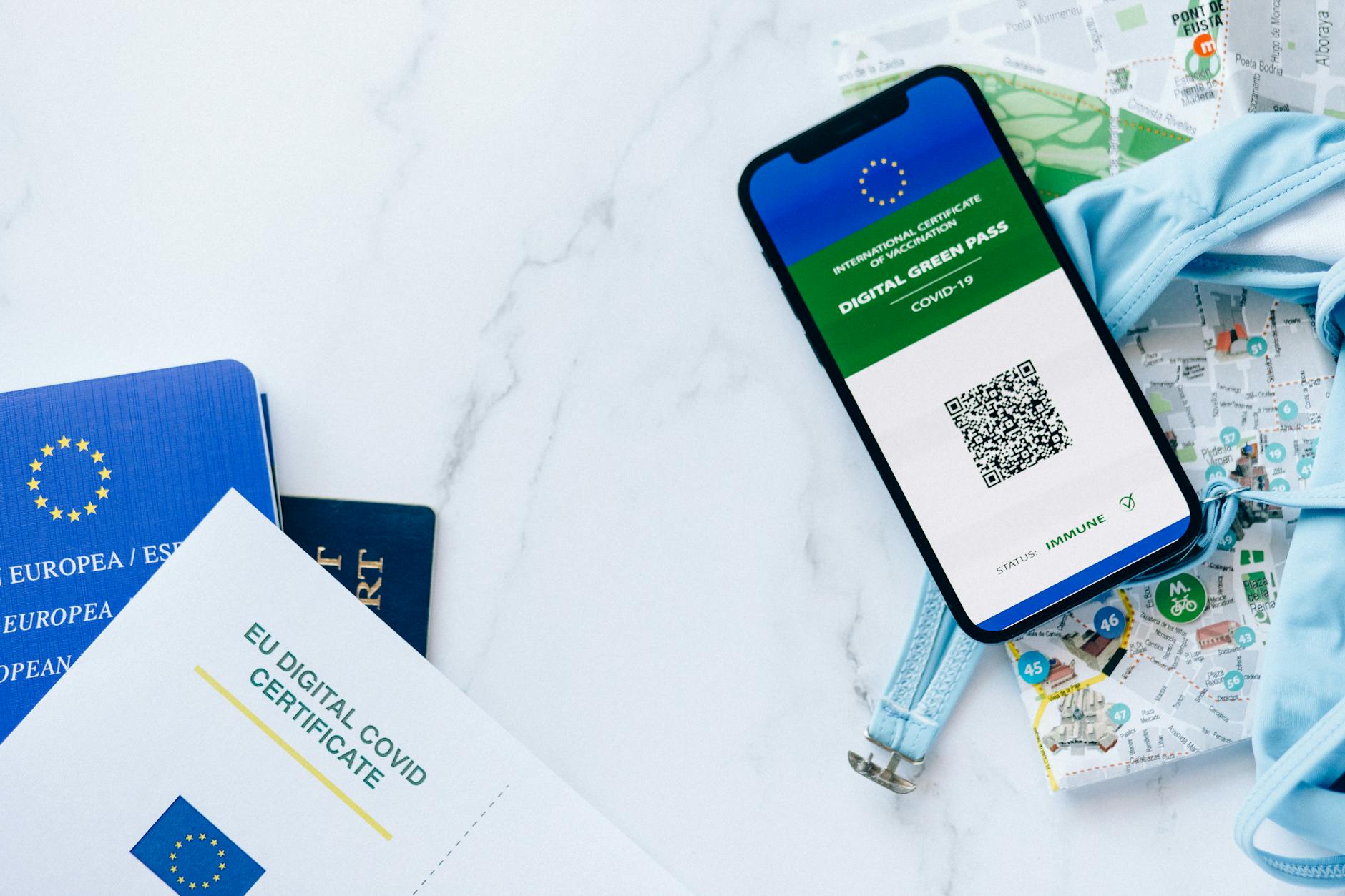
EUDI Wallet Deadline Looms
7 Min. Read Time
The European Digital Identity Wallet has become a mandatory roadmap for all EU member states with the eIDAS 2.0 coming into effect in May 2024. From May 2026, national pilot rollouts will start in Germany, Austria, and a growing number of other countries. By November 2027 at the latest, private acceptance points in banking, energy, telecommunications, and platform business models must accept the wallet as proof of identity. Those who don’t adapt their KYC and onboarding stack now will either have to manage two parallel identification processes in 2027 or lose out on time-to-yes in the competition.
04.05.2026
Key Takeaways
- Mandatory acceptance by November 2027: Banks, savings banks, insurers, energy suppliers, telecommunications providers, and large online platforms must accept the EUDI Wallet as a means of identification. This is not a recommendation, but directly enforceable EU law under the eIDAS 2.0 regulation.
- Pilot starting May 2026 in Germany: The German wallet architecture, led by the Federal Ministry of the Interior (BMI), will start with two reference implementations, one government-led and at least one private-sector implementation. Initial use cases include opening a bank account, concluding a mobile phone contract, hotel registration, and access to administrative services.
- Architecture effort: 6 to 12 months: For an average mid-sized company onboarding process with video identification integration, AML layer, and ERP integration, the implementation path is expected to take 6 to 12 months. Those who want to participate in the 2026 pilot already have the project on their roadmap. Those who wait until 2027 will be planning with a tight buffer.
Related:2026 Risk Profile: Caution as the Costliest Strategy / ePA Rollout as a Growth Market
What’s really new in 2026
With eIDAS 2.0, the identification market is changing structurally for the first time since the introduction of the ID card eID in 2010. Not because a new technology is emerging, but because the regulation is enforcing acceptance. Those who offer bank accounts, SIM cards, or electricity contracts online will no longer be able to refuse proof of identity via the wallet from November 2027.
What is the EUDI Wallet exactly? A smartphone app issued or certified by a member state, in which citizens store, control, and release their official identity attributes to acceptance points. Technically, it is based on the eIDAS reference frameworks, OpenID4VC, Verifiable Credentials, and the EU Architecture and Reference Framework specification 1.4. Mid-sized companies will interact with the wallet in two roles: as a relying party that verifies identity or, less commonly, as an attribute provider that issues membership proofs or certificates.
Where the restructuring starts in a typical mid-market onboarding process
The onboarding stack in the DACH mid-market looks like this in 80 percent of cases: customer form on the web frontend, video identification or eID jump, AML database comparison, contract document generation, signature via DocuSign or Adobe Sign, handover to ERP. EUDI Wallet intervenes in five of these six steps.
In the future, identification will not be done via video identification, but via wallet presentation. The AML database comparison will receive additional attributes that the wallet can provide (e.g. tax ID, commercial status, PEP marker). The signature layer benefits from qualified electronic signatures that the wallet can issue without a separate smart card. The ERP interface receives structured JSON-LD attributes instead of PDF attachments.
The effort is not just in one of these points, but in the concatenation. A pure wallet acceptance library on the website is not enough. If you don’t pass on the data records to the ERP, you have integrated the wallet at the front and the old paper workflow at the back.
Onboarding Step Mapping: Before / After
| Step | Status 2025/2026 | With EUDI Wallet from 2027 |
|---|---|---|
| Identification | Video identification, eID citizen portal, POSTIDENT | Wallet presentation with selectable attributes |
| Proof of address | Registration confirmation PDF, Schufa inquiry | Verifiable credential from the registration office directly in the wallet |
| AML / PEP check | External list connection, manual review | Wallet attributes plus reduced external list run |
| Contract conclusion | DocuSign, Adobe Sign, eIDAS-1.0 signature | QES directly from the wallet, without separate signature hardware |
| ERP handover | PDF attachment plus manual data typing share 8 to 15 percent | JSON-LD from wallet presentation, typing share under 1 percent |
| Time-to-Yes median | 3 to 5 working days (banking), 24h (mobile) | Sub-15 minutes in both cases, if ERP is well connected |
Sources: BMI EUDI Wallet Architecture Paper 2026-02, Bitkom Study Identity Onboarding 2025, three DACH bank onboarding audits 2026 Q1, eIDAS-2.0 Regulation Art. 5a-5d.
“Whoever doesn’t restructure their KYC and onboarding stack now will be running two parallel identification paths in 2027 or lose out on Time-to-Yes in the competition.”
Three industries, three different pressure points
Banks and savings banks have by far the tightest deadline. AML obligations plus PSD2 Strong Customer Authentication plus GDPR data minimization converge in the wallet use case. Those who currently operate three identification paths in parallel (branch identification, video identification, eID) will get a fourth one that cannot be rejected from 2027 onwards. Most DACH banks have scheduled the architecture review for Q4 2025, and the pilot rollout in 2026 is visibly being prepared by the cooperative banking associations.
Energy suppliers face less AML pressure, but more volume. Municipal utilities process an average of 20,000 to 80,000 online contract closures per year, with each step involving eID costing between 2.80 and 4.50 Euro. Wallet identification reduces this to under one Euro per transaction. For 50,000 transactions, that’s a difference of 100,000 to 175,000 Euro per year. Investment calculation: 6 to 9 months amortization for medium-sized municipal utilities.
Telecommunications providers are in the surprising position of benefiting from the wallet without feeling the pressure from banks. The identification requirement under the Telecommunications Act has been in place since July 2017, and the process is now being simplified. The question here is not if, but when: joining in 2026 reduces CAPEX, while catching up in 2027 costs double.
Timeline from May 2026 to November 2027
Those who plan the roadmap backwards from the mandatory date arrive at four phases.
- May to September 2026 – Concept and pilot observation: Architecture review of own onboarding paths, mapping to EUDI architecture, selection of wallet provider and trust service provider. Observation of government pilot rollouts in Germany and Austria.
- October 2026 to March 2027 – Build and test integration: Integration of wallet acceptance library, rewiring of KYC and AML path, ERP mappings to JSON-LD attributes, internal test environment with test wallets from Bundesdruckerei or commercial providers.
- April to August 2027 – Productive rollout in stages: First internal beta with employees, then B2B use cases, then end-customer paths. Parallel maintenance of existing paths, as the wallet will not yet have full coverage in 2027.
- September to November 2027 – Full operation: Mandatory acceptance is enforced, customer service training, documentation, AML audit trail with wallet data, reporting to supervisory authority. Backup paths remain in place for citizens without wallet usage.
Where mid-market plans typically fail
Three silent frictions can be gleaned from the first architecture reviews. Firstly, ERP integration: old SAP versions with self-built identity mapping tables cannot process JSON-LD fields without middleware. Secondly, the AML vendor: not every AML database connection accepts wallet attributes instead of classic input data, and some providers will only update in Q3 2027. Thirdly, the customer service cut: without clear escalation paths for citizens without a wallet (estimated 15 to 25 percent of adults in 2027), a double service burden looms.
The honest expectation: not everything will run smoothly in 2027. Those who utilize the pilot in 2026 will learn about these frictions before the deadline.
Frequently Asked Questions
Will all DACH mid-sized companies have to accept the Wallet from November 2027?
No, mandatory acceptance applies to defined sectors: banks, insurance companies, telecommunications, energy, and very large online platforms under DSA. Traditional B2B mid-sized companies without these profiles are not directly obligated but benefit from voluntary integration into procurement and contract processes.
What costs are associated with a typical mid-sized company onboarding?
For a DACH mid-sized company onboarding with video identification connection, AML layer, and ERP integration, implementation costs typically range between 80,000 and 320,000 Euro, depending on the existing architecture and whether a proprietary Wallet acceptance stack or a provider service is used. Ongoing costs are reduced by 60 to 80 percent compared to video identification per transaction.
How does the Wallet comply with GDPR and data protection?
The Wallet is GDPR-compliant by design because the user individually releases each attribute (Selective Disclosure). Acceptance points may only request attributes necessary for the specific transaction. Requesting more data risks a fine under GDPR and an eIDAS-2.0 violation.
What happens to existing customers whose identification still relies on video identification?
Existing data remains valid; re-onboarding is not mandatory. From 2027, the Wallet can be used as a preferred re-verification path for security-relevant changes (address, account holder change, contract adjustment). AML supervisory authorities recommend testing re-verifies voluntarily during the 2026 pilot phase.
About the Author
Eva Mickler writes for MyBusinessFuture about regulatory issues, compliance, and the gap between regulatory text and mid-sized company everyday life. Focus: interfaces between law, technology, and operations.
Read more on MyBusinessFuture
MyBusinessFutureGerman Banks Flunk Stress TestsMyBusinessFutureE-Invoicing: Switch to XRechnungMyBusinessFutureAI Over Budget: What Bitkom’More from the MBF Media Network
cloudmagazinBSI-KRITIS and Cloud Usage 2026: Multi-Cloud Compliance under NIS2 and C5Digital ChiefsAI Governance 2026: System-Level instead of Excel ComplianceSecurityTodayEU AI Act High-Risk Deadline August 2, 2026: Supervisory VacuumSource title image: Pexels / Nataliya Vaitkevich (px:8830667)
Translated from the German original using artificial intelligence. The German version is authoritative.

