
Bernau Utilities: 20% Smart-Meter Milestone & Lessons
7 min read
In late 2025, the Federal Network Agency (Bundesnetzagentur) confirmed: Germany has reached the nationwide legal requirement of a 20 percent smart meter rollout. The total stands at exactly 20.2 percent—but the BNetzA has initiated enforcement proceedings against 77 grid operators due to insufficient rollout progress. Smaller network operators with fewer than 30,000 metering points are averaging just 8.2 percent. Stadtwerke Bernau demonstrates how a hybrid approach—starting externally and scaling internally—can succeed.
Key Takeaways
- Target achieved: With 20.2 percent, Germany has narrowly met the legal 20 percent threshold for intelligent metering systems by the end of 2025. Already, 23.3 percent of mandatory households are equipped (BNetzA quarterly survey).
- Large vs. small grid operators: Network operators with over 500,000 metering points average 25 percent. Operators with fewer than 30,000 metering points lag behind at 8.2 percent—a structural deficit.
- 77 proceedings ongoing: The BNetzA has initiated enforcement actions against 77 grid operators that have not yet begun their rollout. Fines are pending, including against municipal utilities in Potsdam, Ludwigshafen, Duisburg, and Nuremberg.
- Bernau as a success story: Stadtwerke Bernau has installed around 300 intelligent metering systems to meet obligations and will switch to internal scaling in 2026. Jürgen Weber was hired specifically as a meter installer.
- EnWG amendment 2026: The upcoming revision of the Metering Point Operation Act within the 2026 EnWG reform will introduce new regulatory requirements for metering point operators, including stricter IT integration and data processing standards.
The BNetzA Balance Sheet at End-2025: 20.2 Percent and 77 Open Proceedings
The Metering Point Operation Act sets a clear roadmap: by the end of 2025, 20 percent of mandatory installations must be equipped with intelligent metering systems. In February 2026, the Federal Network Agency published its assessment—and the results are mixed. The 20.2 percent threshold has been met, formally achieving the first legislative milestone. Yet the aggregated figure masks a structural imbalance between large and small grid operators—one that is expected to deepen in the coming years.
Grid operators with more than 500,000 metering points average around 25 percent—surpassing the requirement and already advancing to the next phase. Mid-sized operators are close to the 20 percent mark. Small operators with fewer than 30,000 metering points (over 600 nationwide) reach only 8.2 percent on average. The gap is now wider than ever since the rollout began.
The Federal Network Agency has responded decisively, launching enforcement proceedings against 77 grid operators where, according to its data, no significant rollout has taken place. Among those named are Netzgesellschaft Potsdam GmbH at 9.8 percent, TWL Netze GmbH in Ludwigshafen at 11.2 percent, Netze Duisburg GmbH at 11.4 percent, and Nürnberger N-ERGIE Netz GmbH at 13.1 percent. Formal warnings with potential fines have already been issued. For the affected municipal utilities, 2026 will no longer be a planning year—but a year of enforcement sprint.
Bernau Municipal Utilities: How the Mandatory Quota Was Achieved
Bernau is situated on the northern edge of Berlin’s “bacon belt”, and the municipal utilities supply roughly 40,000 residents with electricity, gas, water and heat. In the BNetzA statistics they are classified as a small grid operator. Nevertheless, the utilities have met the mandatory quota by the end of 2025 – thanks to a clear two‑stage approach that can serve as a blueprint for other small operators.
In the first phase, 2024 to 2025, Bernau relied on an external service provider for the installations. About 300 smart metering systems were therefore installed within the legal deadline. The external route was necessary because internal capacity would not have been sufficient to deliver the quota on time. At the breaking point between planning certainty and speed, choosing the service partner proved the right move – even though it meant higher unit costs than a purely internal handling.
For 2026 the utility has shifted its strategy. By hiring Jürgen Weber as a permanently employed meter installer, Bernau will handle the installations entirely in‑house from now on. A further 500 metering systems are planned for the current year. The reasons for the switch are greater flexibility in scheduling, reduced reliance on external capacity, and leaner processes through close integration with its own customer service. According to the utility’s calculations, the investment in the in‑house position pays for itself already in the first year thanks to saved service‑provider margins.
Fabian Schultz, head of the market and service division at Bernau Municipal Utilities, summed up the situation in a statement from March 2026: the smart‑meter rollout is a challenging project for many metering point operators. The wording is defensive yet honest – it reflects the reality of hundreds of small utilities that all have to meet the same obligation without the resources of a hyperscaler.
Why small grid operators are lagging behind
The gap between 25 percent for large operators and 8.2 percent for small ones isn’t about reluctance—it’s about structural differences that can’t simply be negotiated away. Three key factors come into play.
| Criteria | Large grid operators (>500k) | Small grid operators (<30k) |
|---|---|---|
| Average rollout rate by end of 2025 | 25 % | 8.2 % |
| Typical installation setup | In-house installation teams plus subcontractors | External service providers, sometimes 1-2 internal staff |
| IT integration depth | SAP IS-U or Schleupen CS.MW, own BSI-TR certification | Service-provider-based, standard modules |
| Average unit cost per installation | 120 to 150 Euro (economies of scale) | 180 to 240 Euro (service margins) |
| Scalability under sudden demand pressure | High (multiple teams can work in parallel) | Low (few installers or external backlogs) |
Sources: BNetzA quarterly surveys, BDEW Smart Meter Rollout Info Day 2026, Stadt+Werk industry analysis
The first factor is simple math: an operator with 20,000 metering points needs to install around 4,000 devices to meet the 20-percent target. An external team manages 30 to 60 installations per week. That’s 70 to 130 weeks of fieldwork—two to three years. Those who started late can’t catch up without buying external capacity, and by 2026, that’s become scarce as all small operators compete for the same service providers.
The second factor is IT integration. Smart metering systems must connect to a BSI-certified gateway. Data sharing with metering point operators, suppliers, grid operators, and distribution system operators runs through standardized interfaces defined in the EDI@Energy specification. Small municipal utilities rarely have in-house teams for this integration, so they either purchase complete packages or rely on industry software like Schleupen CS.MW or Kisters BelVis. Both work, but they come with licensing fees and integration effort.
Source: Bundesnetzagentur quarterly smart metering system survey, February 2026
The third factor is customer communication. A smart meter is installed in a home or apartment—the customer must accept appointments, grant access, and understand the new technology. Large grid operators have call centers, online booking, and automated reminder systems. Small municipal utilities often still rely on letters and phone follow-ups. That costs appointments, follow-ups, and time per installation. In short, it explains the quota gap better than any tool debate ever could.
The Hybrid Approach: Start External, Scale In-House
Bernau demonstrates a model that’s realistic for many small municipal utilities: begin with external service providers to meet the mandatory rollout targets, then gradually build internal capacity for the next expansion phase. The advantage is clear—initial costs remain financially predictable, and the risk of missing quota deadlines is mitigated by the service partner. Once in-house expertise is established, per-unit costs drop significantly.
Operationally, however, the transition involves more than just adding a new role to the organizational chart. The in-house technician requires training on BSI-certified gateways, access to the utility’s rollout management system, integration with billing and market communication systems, and thorough documentation for every installation—securely archived to meet BSI audit requirements. Bernau factored in these operational demands alongside building its technician team. IT integration was coordinated with the existing metering point operator service provider.
For customer outreach, Bernau plans to offer voluntary installations starting Q2 2026 for households with annual consumption of at least 3,000 kilowatt-hours. A one-time fee of 100 Euro applies, and customers can request installation via a simple online form on the utility’s website. This delivers two benefits at once: additional rollout volume toward the next BNetzA quota and stronger customer engagement through a visible digitalization initiative. While Bernau didn’t invent this model, its clean execution within the small network operator segment is rare.
2026: How the EnWG Amendment Will Affect Municipal Utilities
Parallel to ongoing rollout implementation, lawmakers are preparing an update to the Metering Point Operation Act as part of the broader Energiewirtschaftsgesetz (EnWG) amendment. Details will be discussed at the BDEW Smart Meter Rollout 2026 information day. The key direction is clear: stricter requirements for market communication, new data transmission rules for Redispatch 2.0 processes, and more consistent implementation of dynamic tariff models under Section 41a EnWG.
For small municipal utilities, this means the one-time smart meter installation is not the end of compliance obligations. New data formats must be supported in-house billing software, and communication with market partners must shift to the updated EDI@Energy specifications. IT systems must provide real-time interfaces to balancing group managers. This is less a rollout challenge than an architectural one—and the impact will be harder on smaller, less IT-integrated utilities.
Six Lessons for Other Municipal Utilities
The Bernau case and the comparison with the 77 operators under BNetzA proceedings yield six concrete recommendations for small municipal utilities that must push ahead with their rollout in 2026 and 2027:
- Think two-tier, not either-or. The fastest route to hitting your quota is through external service providers, while the most sustainable is building internal capacity. Those who see these two modes as sequential—rather than choosing one—save money and gain planning certainty.
- Factor in IT integration early. A smart meter without seamless integration into billing, market communication, and grid management systems only generates rollout statistics—not operational value. IT integration belongs at the start of planning, not the end.
- Calculate service provider margins realistically. External installation partners currently charge €60 to €100 more per installation than an in-house solution. With thousands of units, this adds up to a substantial cost block often underestimated in initial calculations.
- Automate customer communication. Every missed appointment, unclear registration, and phone inquiry costs hours. Utilities that don’t digitize appointment scheduling and reminders lose 20 to 30 percent of their potential installation speed.
- Take BNetzA reporting obligations seriously. Quarterly reports aren’t just a box-ticking exercise—they’re the basis for imposing fines. Those who report accurately and document progress significantly reduce their risk of penalties.
- Use voluntary expansion as leverage. Bernau’s model—voluntary installations for customers with annual consumption over 3,000 kilowatt-hours—can be replicated by any municipal utility. It generates additional volume, eases mandatory quota pressure in the coming years, and strengthens customer loyalty.
Conclusion
For small municipal utilities, the smart meter rollout isn’t a technical challenge—it’s an organizational test. The technology is standardized, gateways are certified, and installation processes are well-established. What sets utilities apart is their ability to plan resources, engage service providers on time, and integrate IT in parallel with field operations. Stadtwerke Bernau has shown that even starting with just 300 devices in the first phase works—if the second phase is planned from the outset.
For the 77 grid operators currently under BNetzA proceedings, the options are clear. Within the next few months, they must present a robust rollout plan that credibly demonstrates how they’ll close the quota gap by the end of 2026. Those who succeed avoid fines. Those who don’t pay not only financially but also lose trust with customers and regulators. The roadmap for 2026 and 2027 leaves no room for error.
More Editorial Analysis
Data Act Implementation Law: What German IoT manufacturers must implement by September 2026
Frequently Asked Questions
Which metering points fall under the mandatory rollout?
The obligation to install smart metering systems applies to consumers with an annual consumption over 6.000 kilowatt-hours as well as controllable consumption devices such as wall boxes and heat pumps under Paragraph 14a EnWG. Generation plants with an installed capacity of 7 kilowatt also fall under this requirement. The 20‑percent quota set by the BNetzA refers to these mandatory cases, not to the entire customer base of a grid operator.
How high are the penalties that the Federal Network Agency can impose?
Penalties under the Metering Point Operation Act can, depending on the procedural stage and duration of the violation, reach several tens of thousands up to hundreds of thousands Euro. The BNetzA can impose penalties repeatedly if a grid operator continues to fail to meet its obligations. In practice, the reputational impact is more important than the absolute amount – a public proceeding significantly damages the company’s standing with customers and municipal owners.
What exactly does the voluntary installation from 3.000 kilowatt-hours mean?
Customers with an annual consumption below 6.000 kilowatt-hours can request the voluntary installation of a smart metering system if the metering point operator makes the offer. Stadtwerke Bernau sets the threshold at 3.000 kilowatt-hours and charges a one‑time installation fee of 100 Euro. For the customer this provides access to detailed consumption data, preparation for dynamic electricity tariffs and greater transparency about their own load. For the utility, the installations count towards future quotas.
Which software is typically used for the smart‑meter rollout?
The most common solutions in the DACH market are Schleupen CS.MW, Kisters BelVis, Wilken Neutrasoft and SAP IS-U for larger utilities. In addition, specialized gateway solutions such as Power Plus Communications, Theben Conexa or PPC SMGW are used. The choice depends less on the meter hardware than on integration with the existing billing and market‑communication landscape. Switching the industry software in parallel with the rollout is risky and should be avoided.
How does the 2026 EnWG amendment fit into the ongoing rollout strategy?
The amendment mainly introduces changes to the metering‑point operator obligations, to market communication for dynamic tariffs and to the data‑exchange formats for Redispatch‑2.0 processes. It does not replace the existing mandatory quotas but adds further operational requirements. Utilities that are just starting their rollout should consider the upcoming requirements when designing their IT architecture, rather than retrofitting them in a second phase.
Is building your own installation teams worthwhile only after reaching a certain size?
A dedicated internal installer position typically becomes cost‑effective at roughly 300 to 500 installations per year, where the margin saved by avoiding external service providers can be realized. Below that level the setup rarely pays off, as idle time and training costs eat into the margin. Bernau hit this threshold with its roughly 500 planned installations in 2026. Smaller utilities should stick to a hybrid approach or create joint installer pools with neighboring companies.
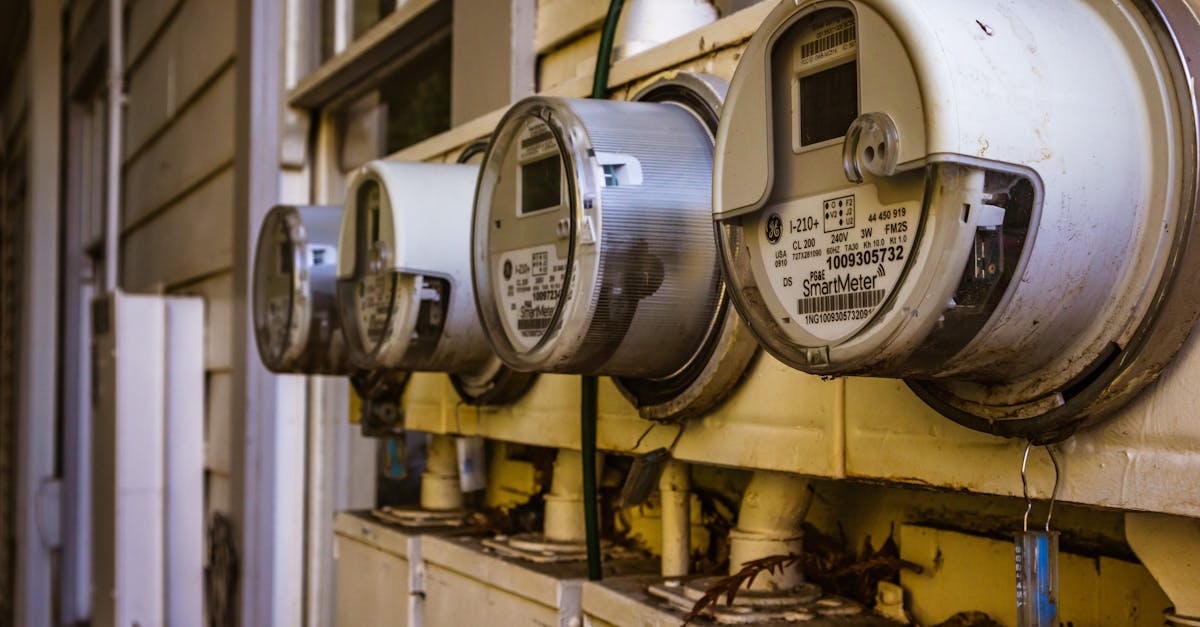
Source cover image: Pexels / Robert So
Translated from the German original using artificial intelligence. The German version is authoritative.


